


For the past few weeks, I have been discussing how investors have been taking a wait-and-see approach, which has pushed the S&P 500 index into its current sideways trading pattern:
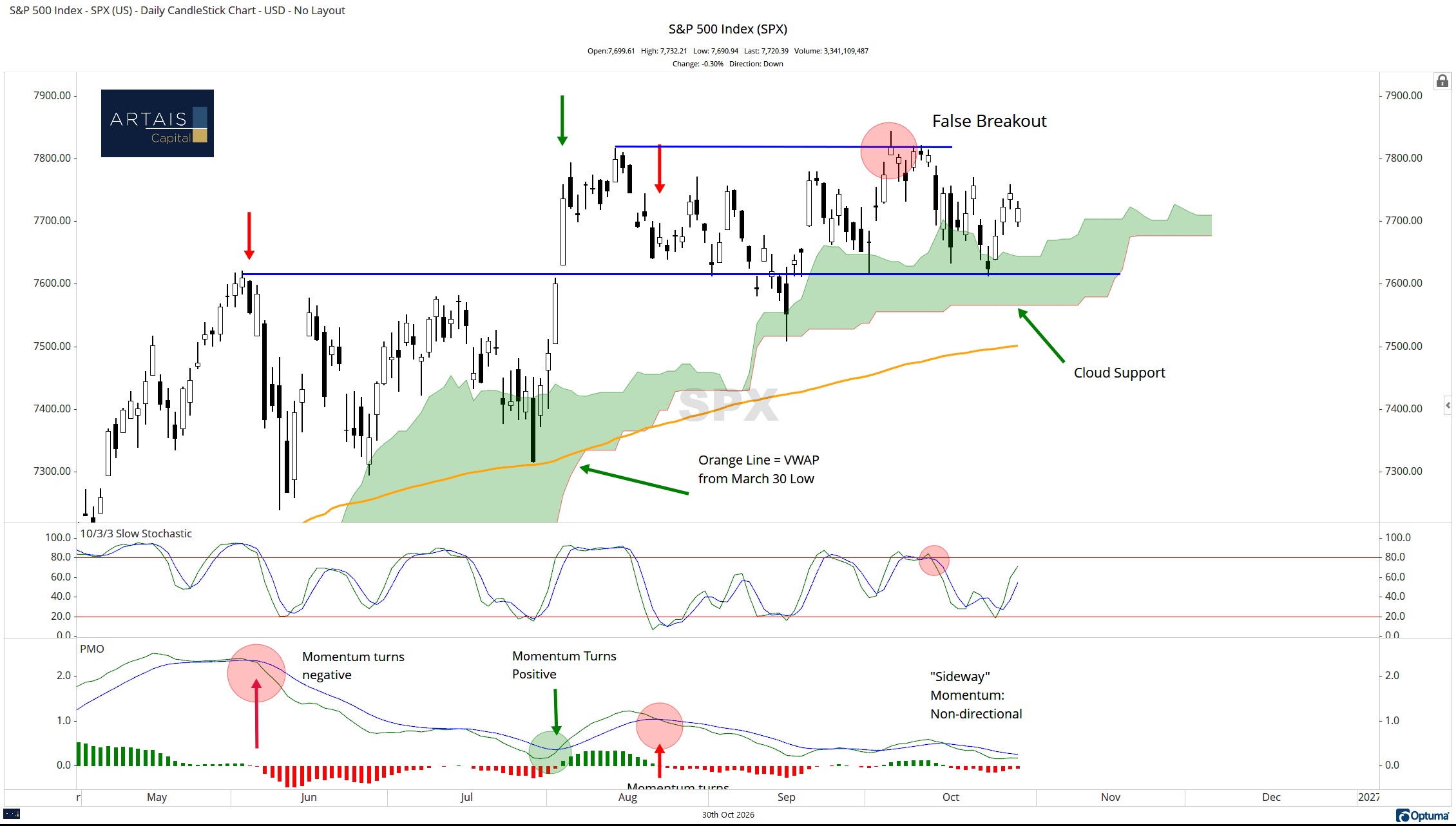
There seem to be three key questions that investors have been wanting answers to, and we now have 2 of the 3 answered.
The 3 Questions:
There have been three key questions market participants have been waiting for an answer to:
Tech earnings/AI growth: This week, major tech companies began reporting earnings. Investors have been watching this space closely to see whether AI revenue growth continues at a rapid pace or whether issues in the economy are starting to weigh on it.
Inflation: The Federal Open Market Committee (FOMC) met this past week. Many, including myself, are worried about bond yields rising, in part due to inflation fears and worries that the Fed is making a policy mistake by not raising rates.
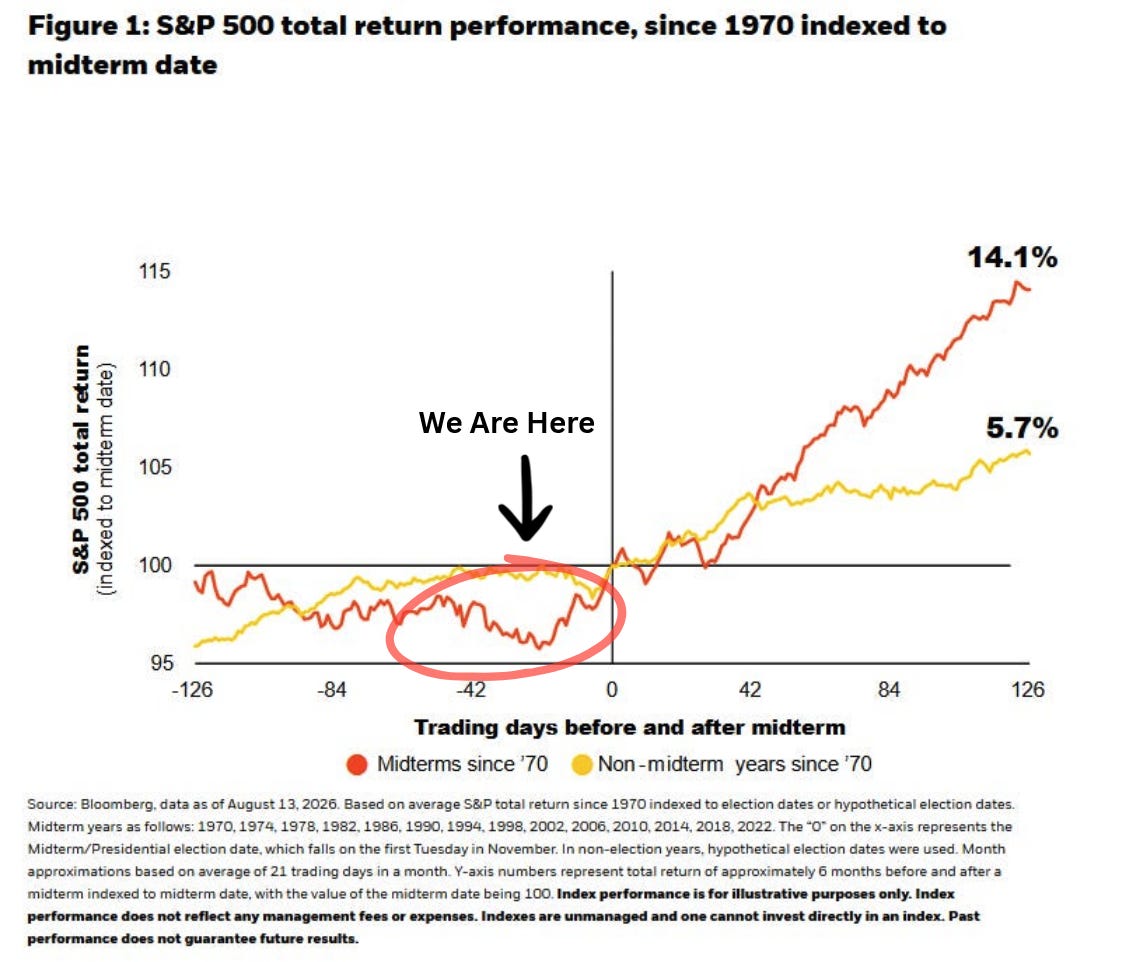
The midterm elections: As I have discussed numerous times, the fourth quarter of a midterm year and the year that follows have historically been a very good time to own equities.
Let’s dive a bit deeper into these questions.
Tech Earnings and AI Growth
Investors have been wanting answers on the progress of the AI buildout. The major tech companies provided the answer, and for the most part, it disappointed the market.
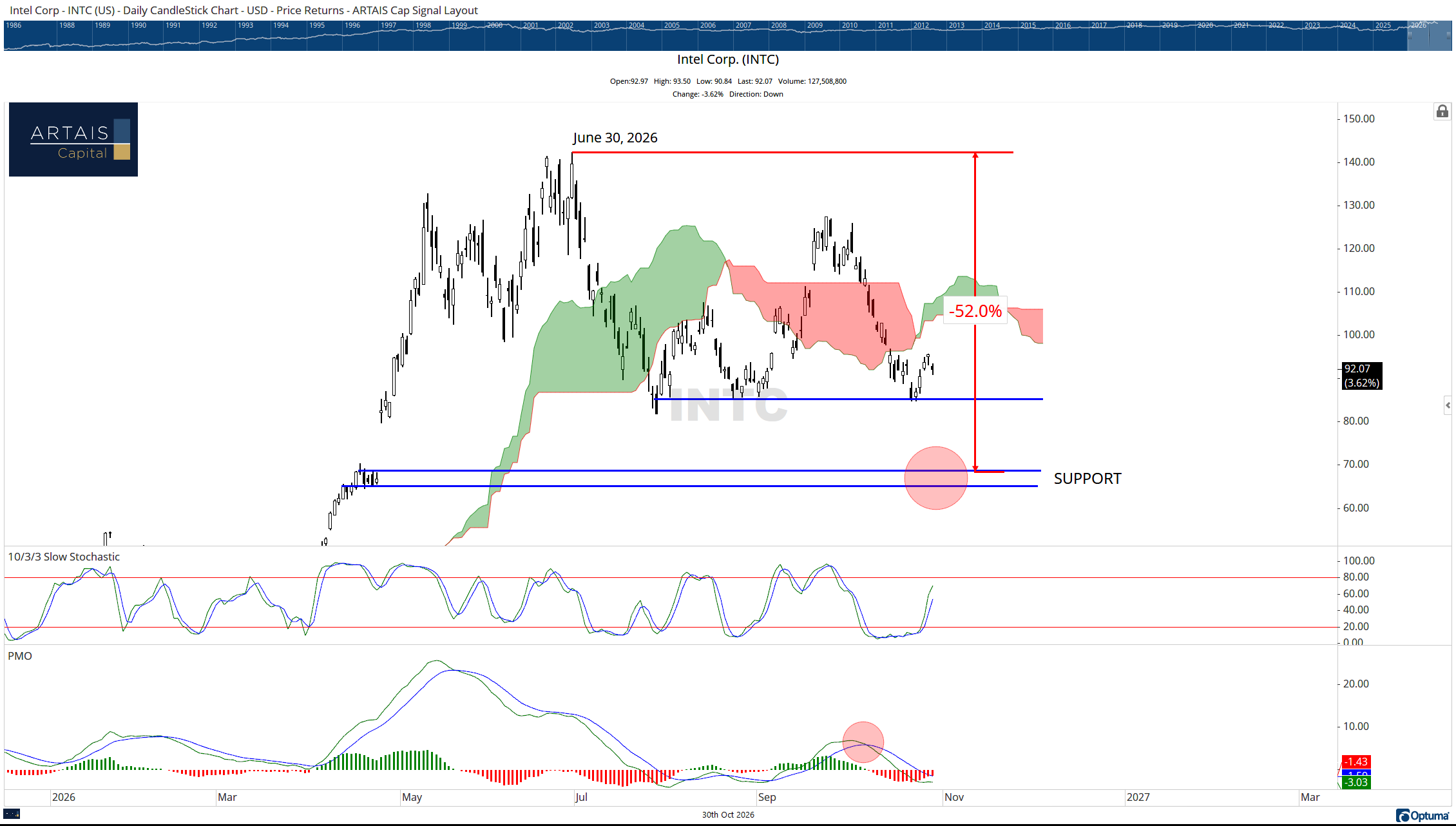
Last night, Intel (INTC) reported earnings, and at the time of writing this research note, the stock looks to open approximately 25% down from yesterday’s close. If that’s the case, then the stock will have fallen over 50% from its June high:
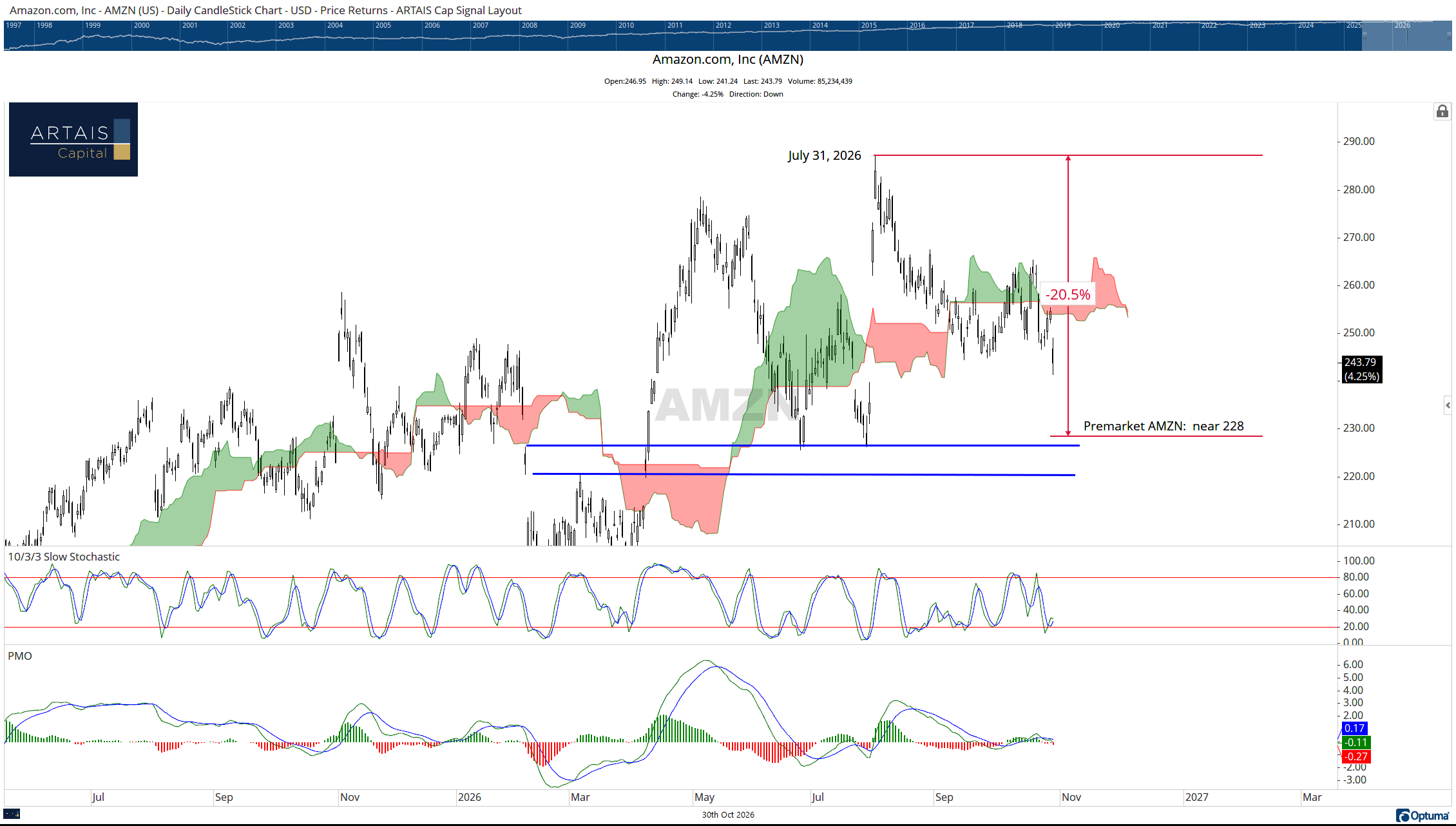
Amazon (AMZN) reported last night as well, and the stock looks to open down 6-7% from yesterday’s close. Since its July 31st high, Amazon stock will have declined over 20%:
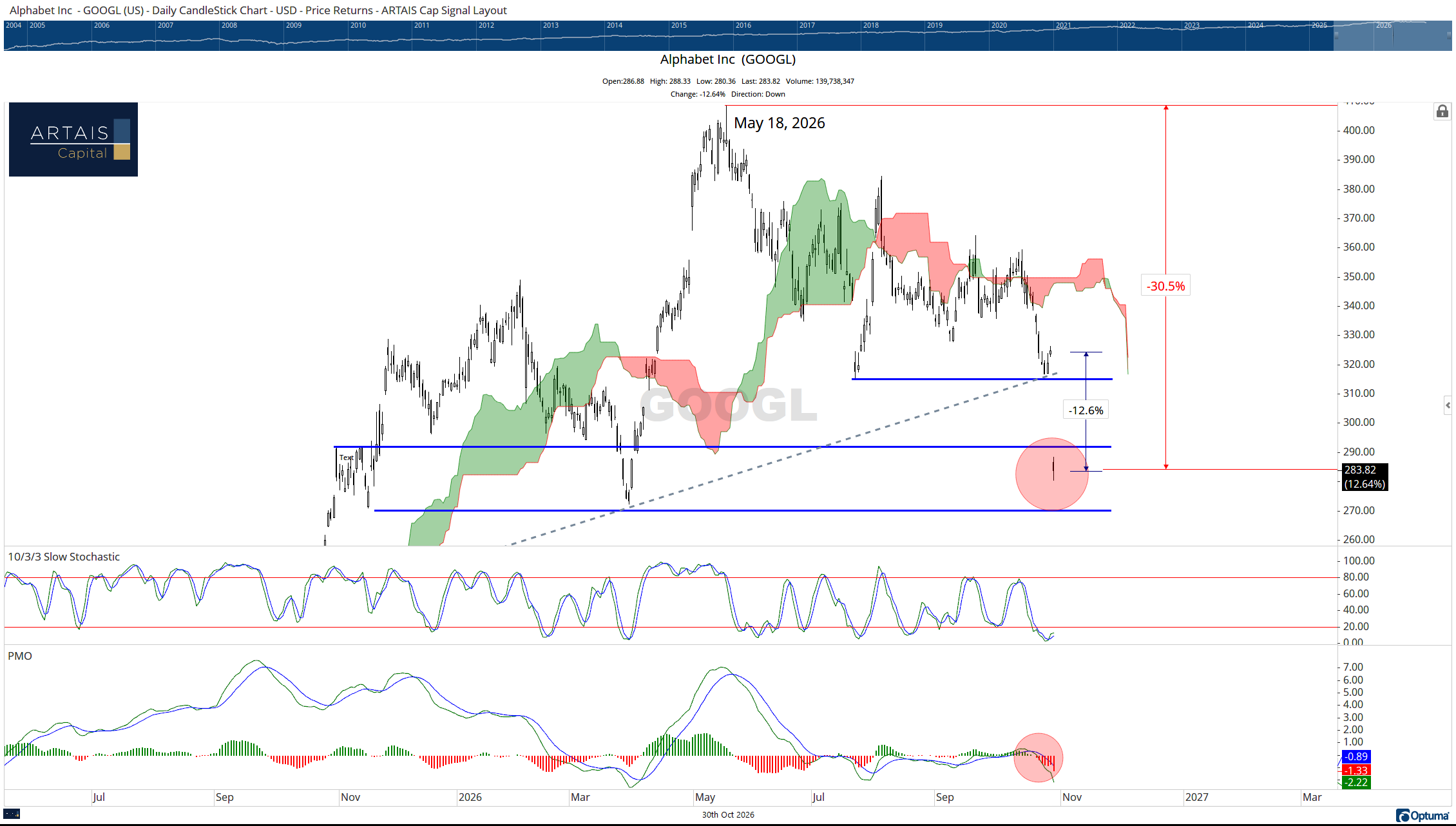
Alphabet (GOOGL) reported Wednesday evening, and yesterday the stock fell over 12% and is now down over 30% from its May high:
Microsoft (MSFT) was able to manage investor expectations a bit better. As a result, the stock has held up better than others in the hyperscaler space:
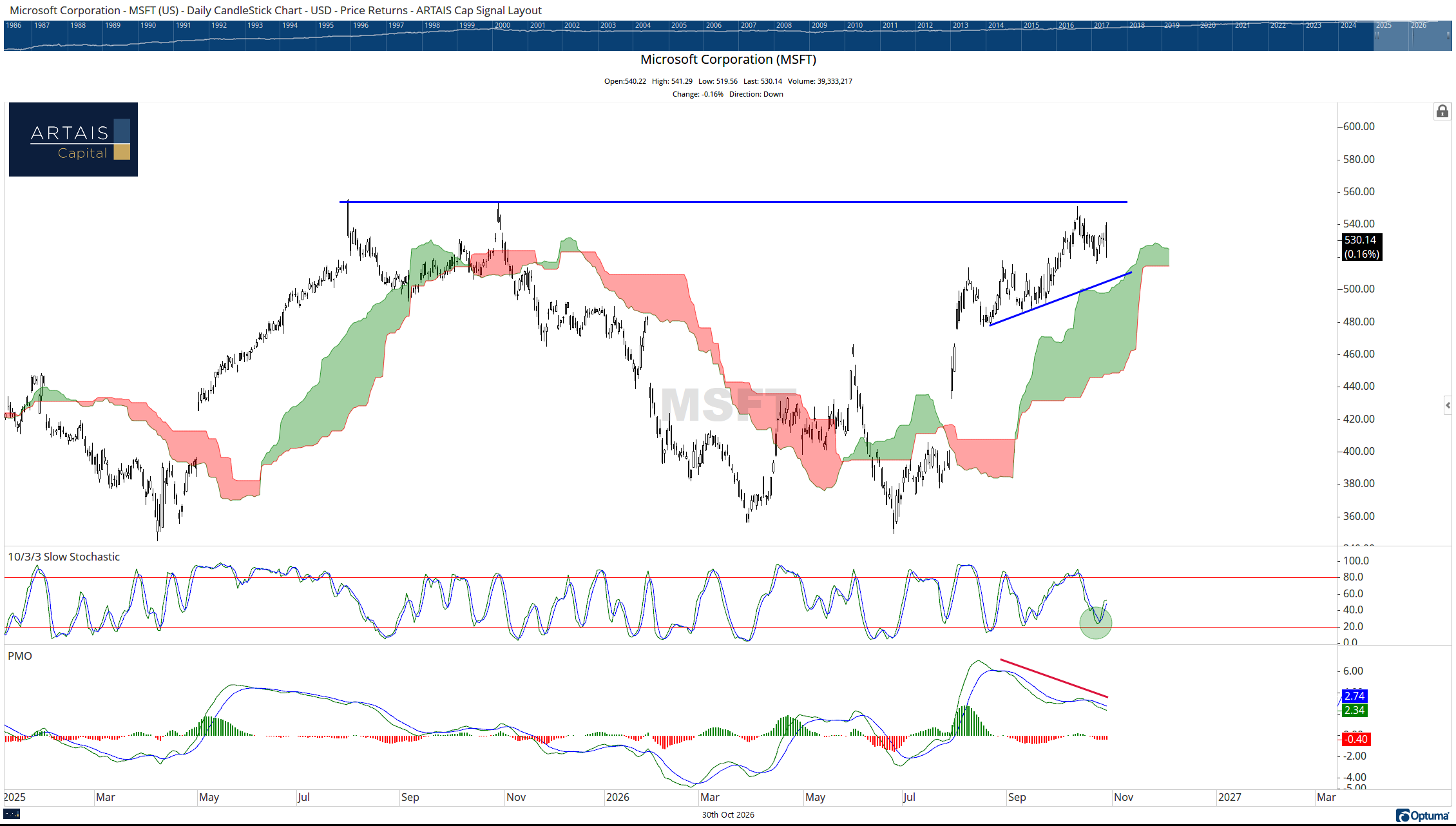
The common theme I heard was not that AI growth is slowing, but that it is becoming more expensive.
Demand continues to rise. Microsoft’s Azure grew 48% and has a $677 billion backlog; Amazon’s AWS grew 39% with a $578 billion backlog; Google Cloud more than doubled.
Despite the strong demand, a lot of money is being borrowed, and higher funding costs due to rising rates are having a negative impact.
In addition, the rising cost of memory chip and storage is forcing these companies to need to borrow even more, and at higher rates.
The worry here is not that the AI bubble is popping; it is that growth is starting to face bottlenecks that may cause the growth rate to slow down to a level below investors’ expectations. Which is why a lot of these stocks are repricing lower.
To make things worse, there is an ongoing electrical supply issue. A common bottleneck that these server companies are having is being able to connect to the grid:
Grid connections in major U.S. markets can take three to four years — and as long as seven years in northern Virginia. Of 16 GW of data center capacity announced for delivery in 2026, only about 5 GW was under construction as of this summer, according to TD Economics.
Texas has gone further, halting new data center grid connections while regulators audit projects amid concerns about speculative or duplicate requests.
Proposed U.S. data center power requests have topped 700 GW, more than 10 times the estimated electricity currently consumed by U.S. data centers.
Data centers want gigawatts now. Power plants, pipelines, and transmission lines still operate on timelines measured in years.
— Source: Power Engineering America’s data center boom is running into a grid-sized problem
The question is, now that the bad news is out and names like Alphabet are down 30% from their highs, will investors start to look for opportunities at current levels?
Inflation
The Federal Open Market Committee (FOMC) met this week and, as expected, voted to leave rates unchanged.
Post-meeting, bond yields slightly fell:
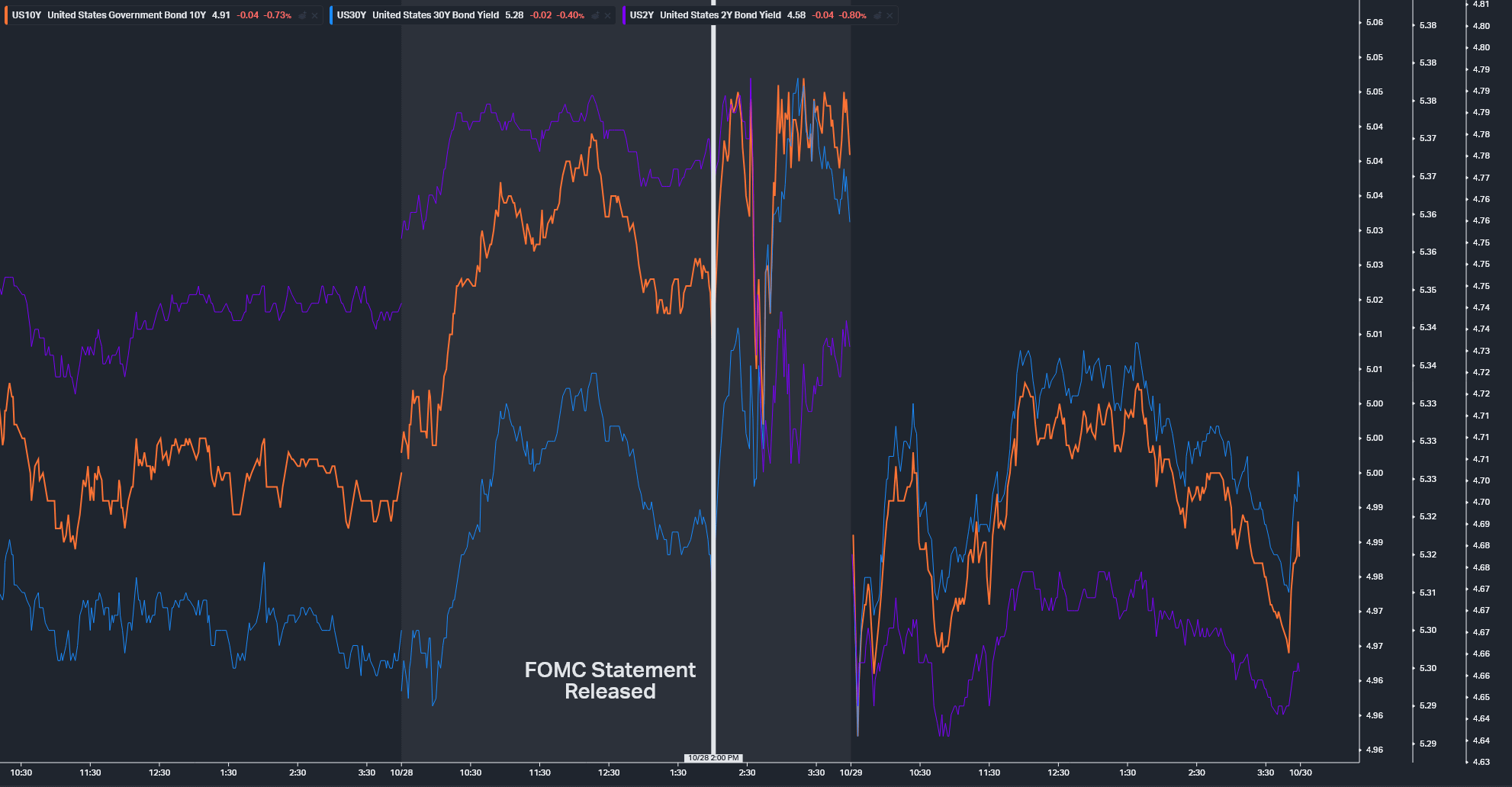
source: Koyfin
… and the expectations of where rates will be this time next year look to have declined slightly:
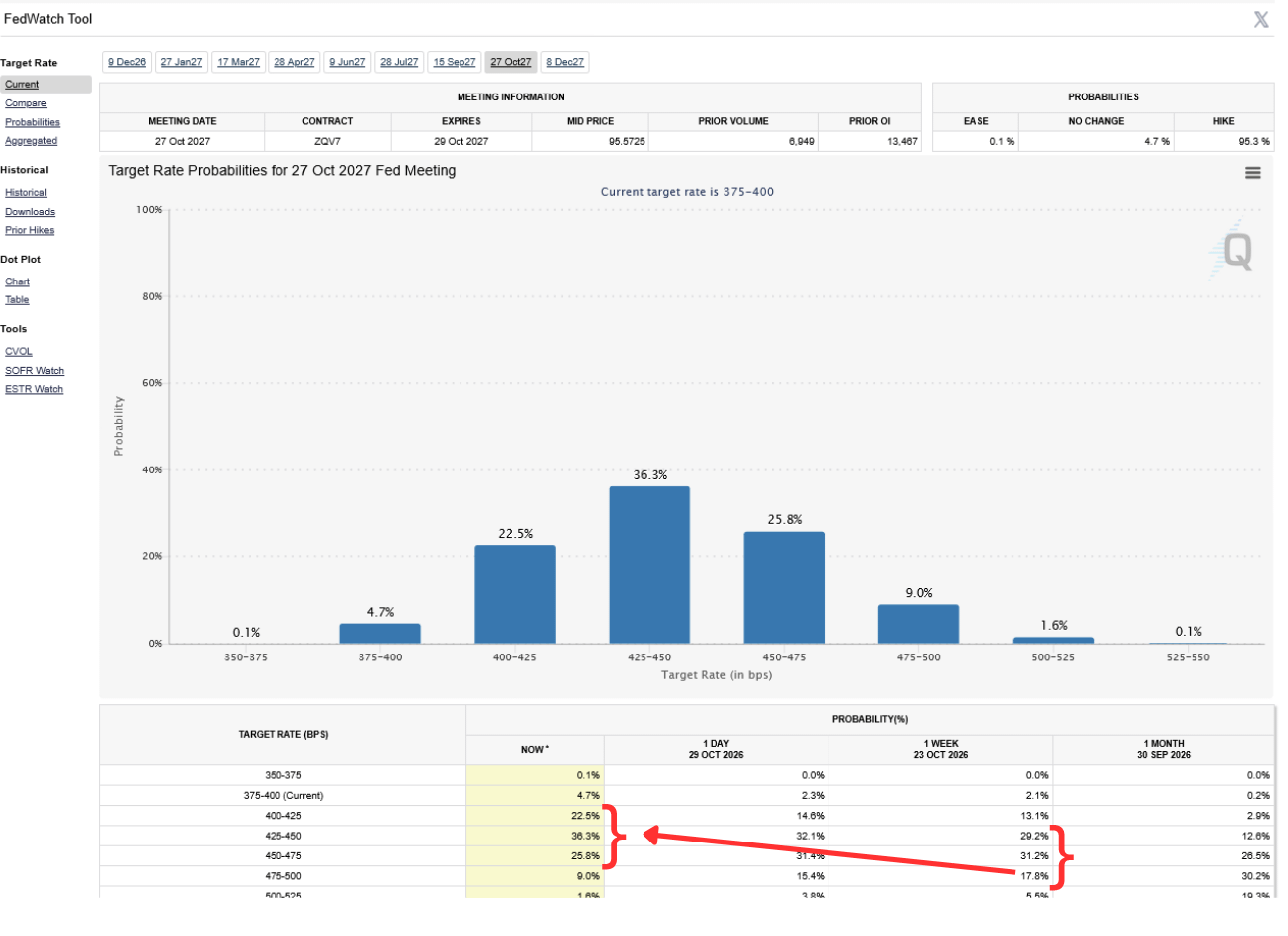
Of the economists I follow, many seem worried the Fed is making a policy mistake by acting too slowly as September’s PCE inflation gauge rose to 3.6% from its previous reading of 3.4% - which is above the Fed’s 2% inflation target.
Others argue that higher inflation is due to higher fuel costs from the Iran conflict, and that raising rates will do nothing to combat this.
Since the experience of the 1970s, the oft-stated intuition has been that central banks should “look through” supply shocks and only respond if they start to have secondary effects on other industries or begin unanchoring inflation expectations.
Much of this “look through” intuition comes from the historical observation that shocks to aggregate supply have tended to produce more transitory inflation than demand shocks do. Weather events, supply bottlenecks, and oil price shocks often resolve relatively quickly—and even when they don’t fully reverse, they are frequently one-time level shifts rather than persistent inflation shocks.
They do not change long-run potential growth, and monetary policy takes months or years to work its way through an economy. So it’s largely pointless—and prone to timing errors—to use monetary policy in response to something short-lived. Why fight against something that’s going away on its own?
-Chicago Fed President Austan Goolsbee: Monetary Policy in an Uncertain World
Regardless of conflicting opinions, the bond market seems to have calmed down a bit as rates have declined since their previous peak:
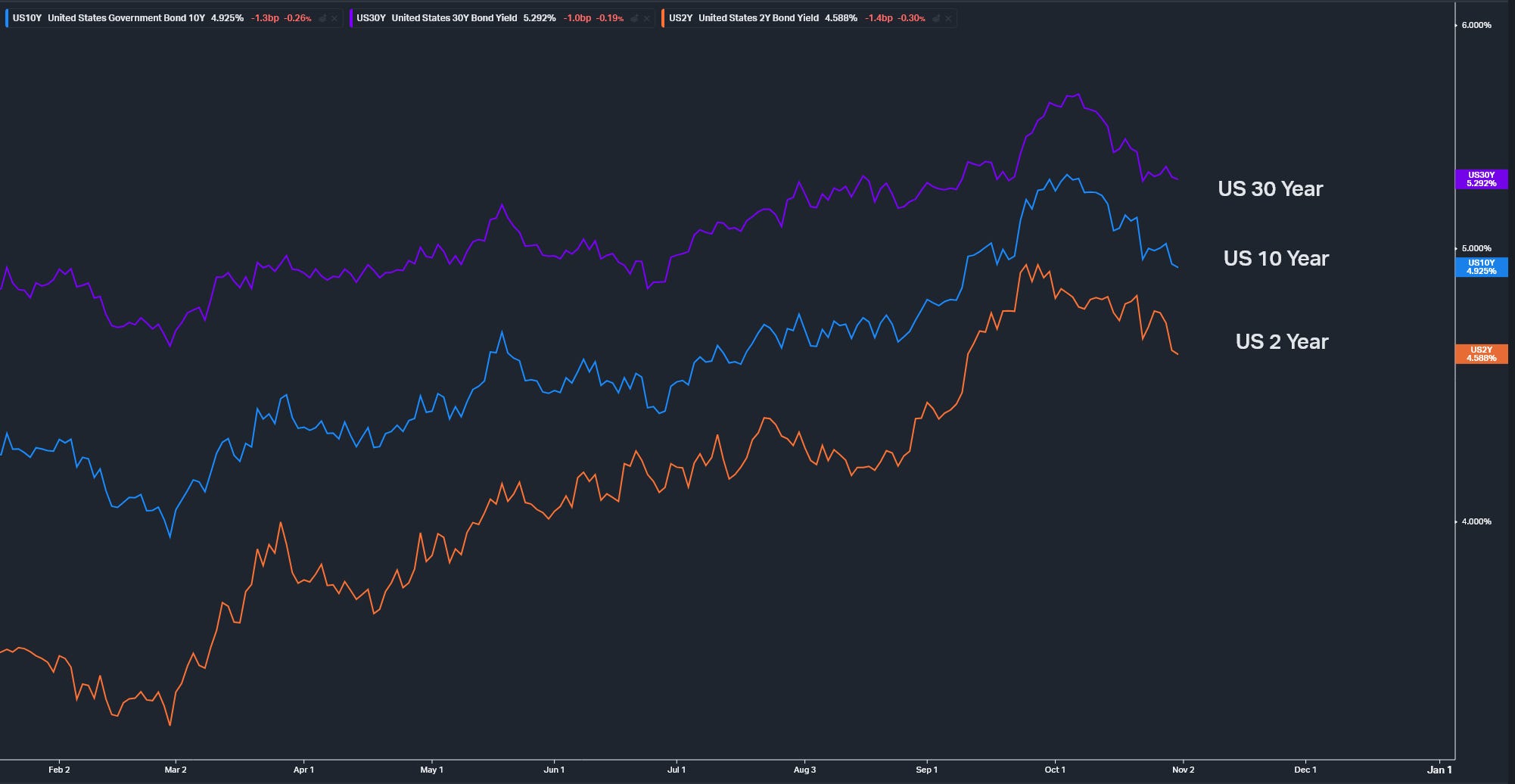
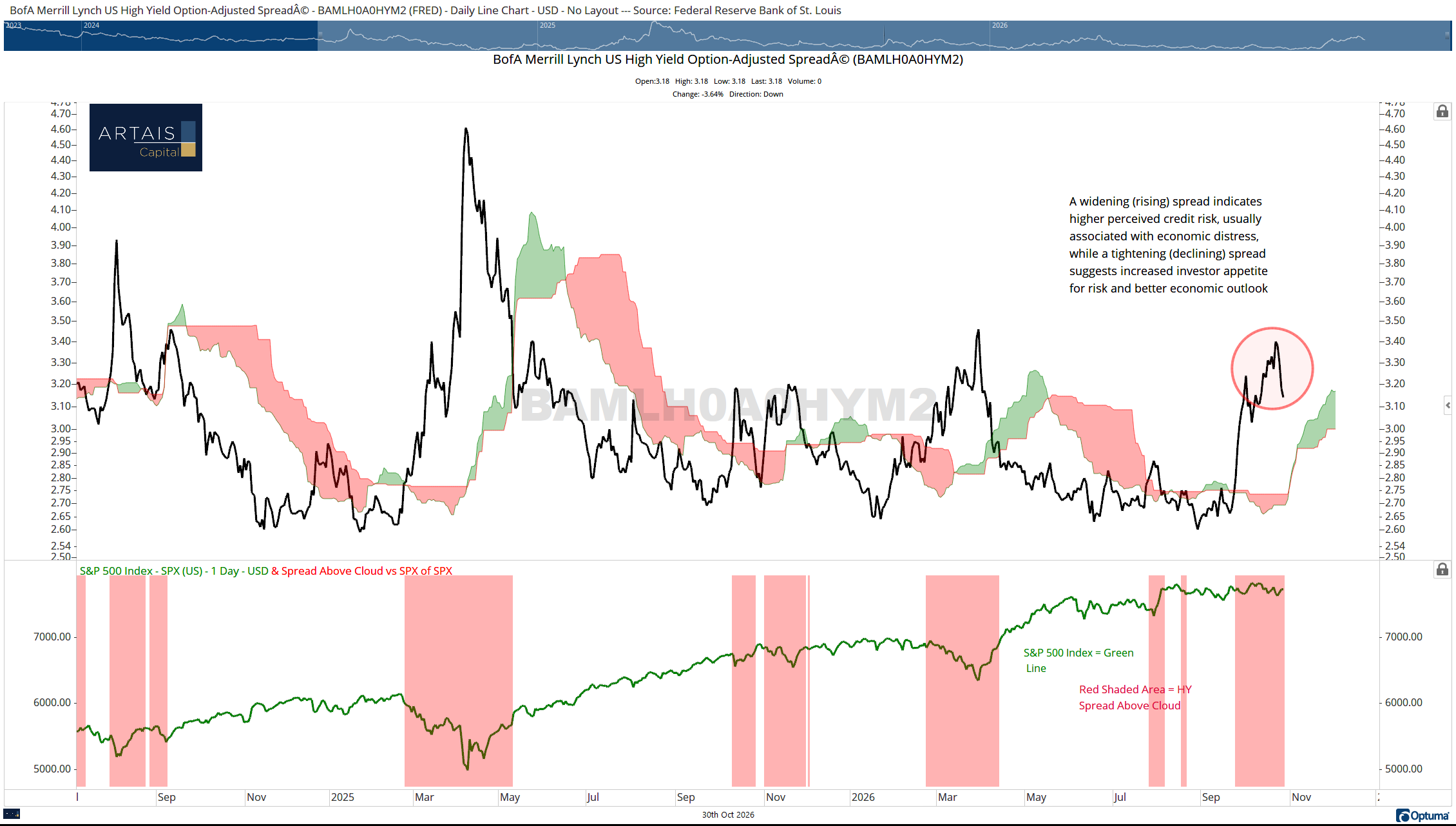
High-yield spreads have also begun to narrow:
Midterm Elections
The last question facing investors is what happens during the midterm elections.
Historically, the period after the election is good for the US stock market:
But if we dive deeper into the data, we can see that not every midterm year since 1950 has been good:
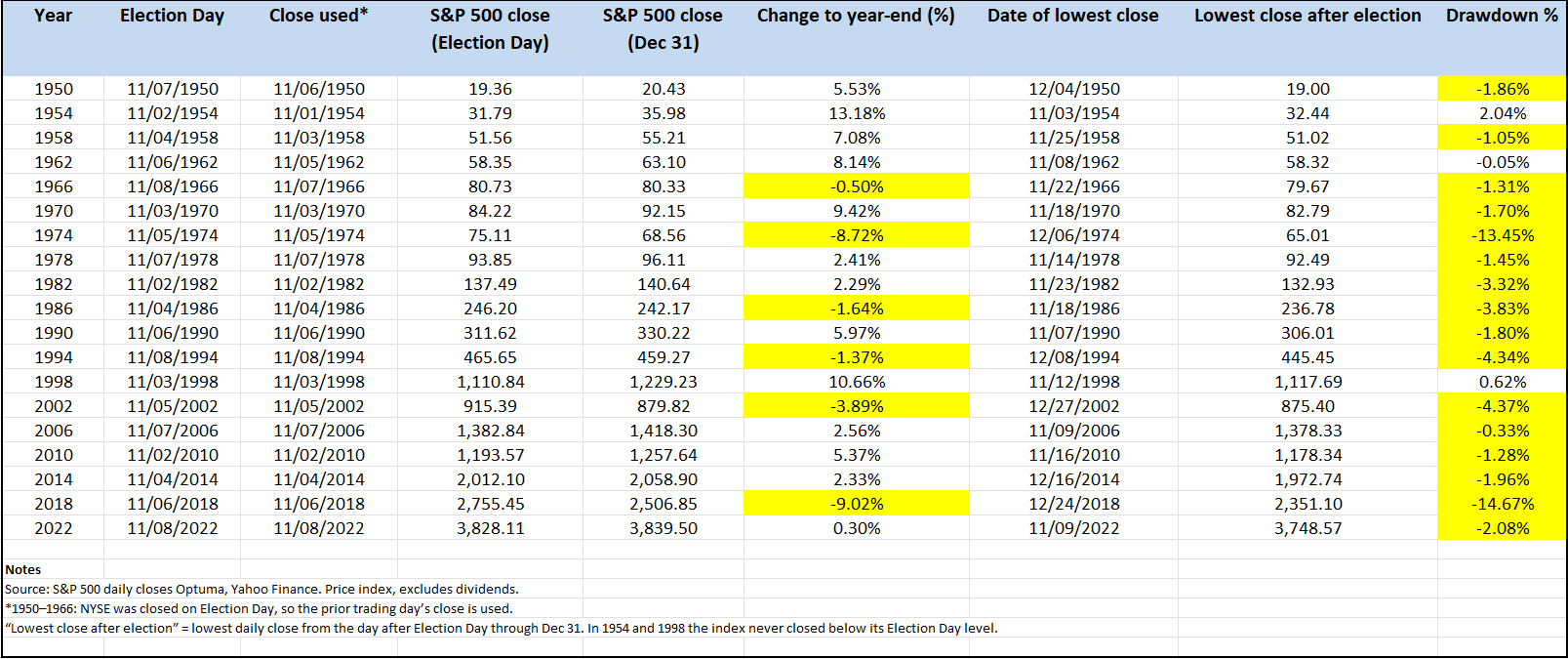
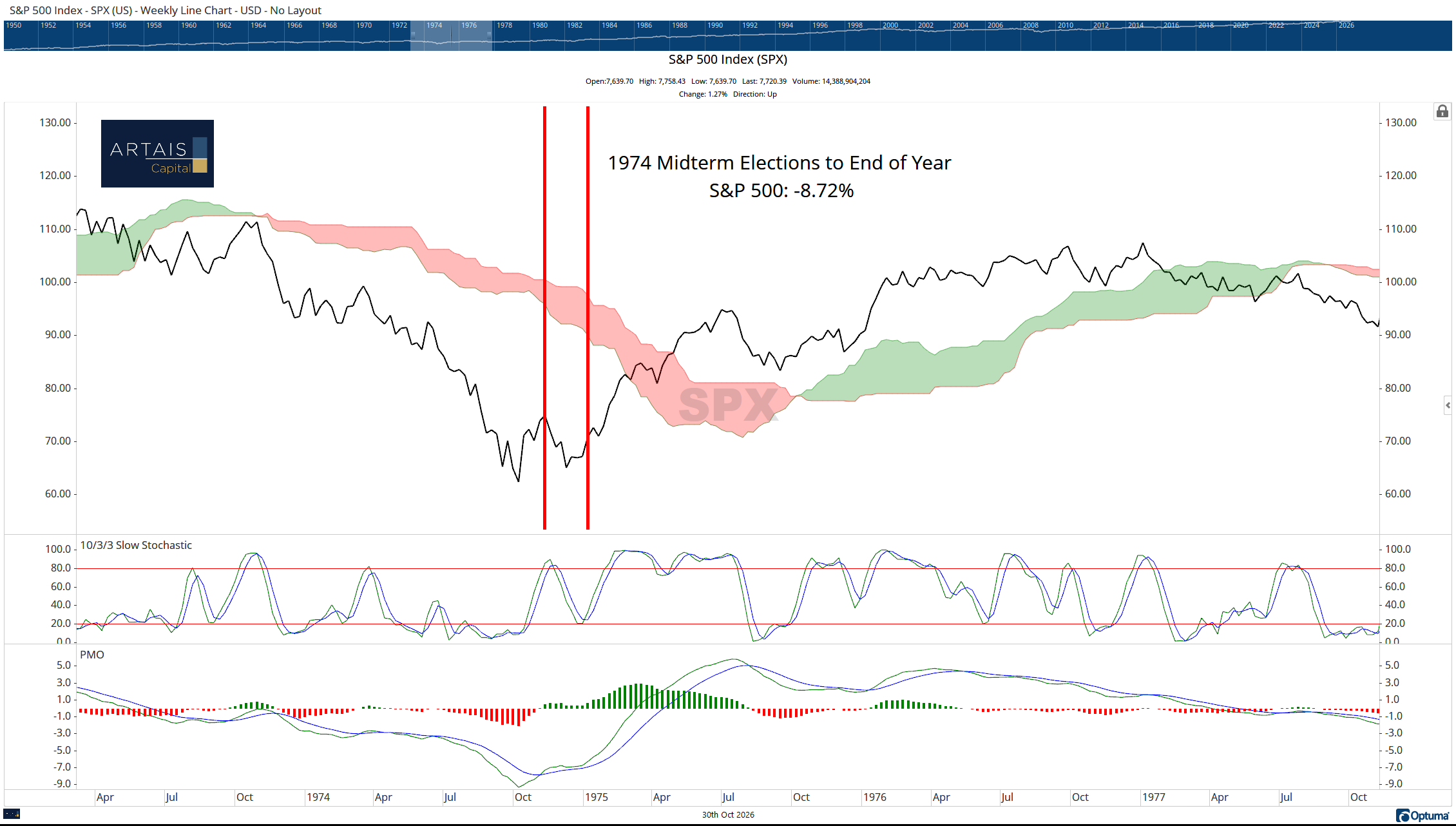
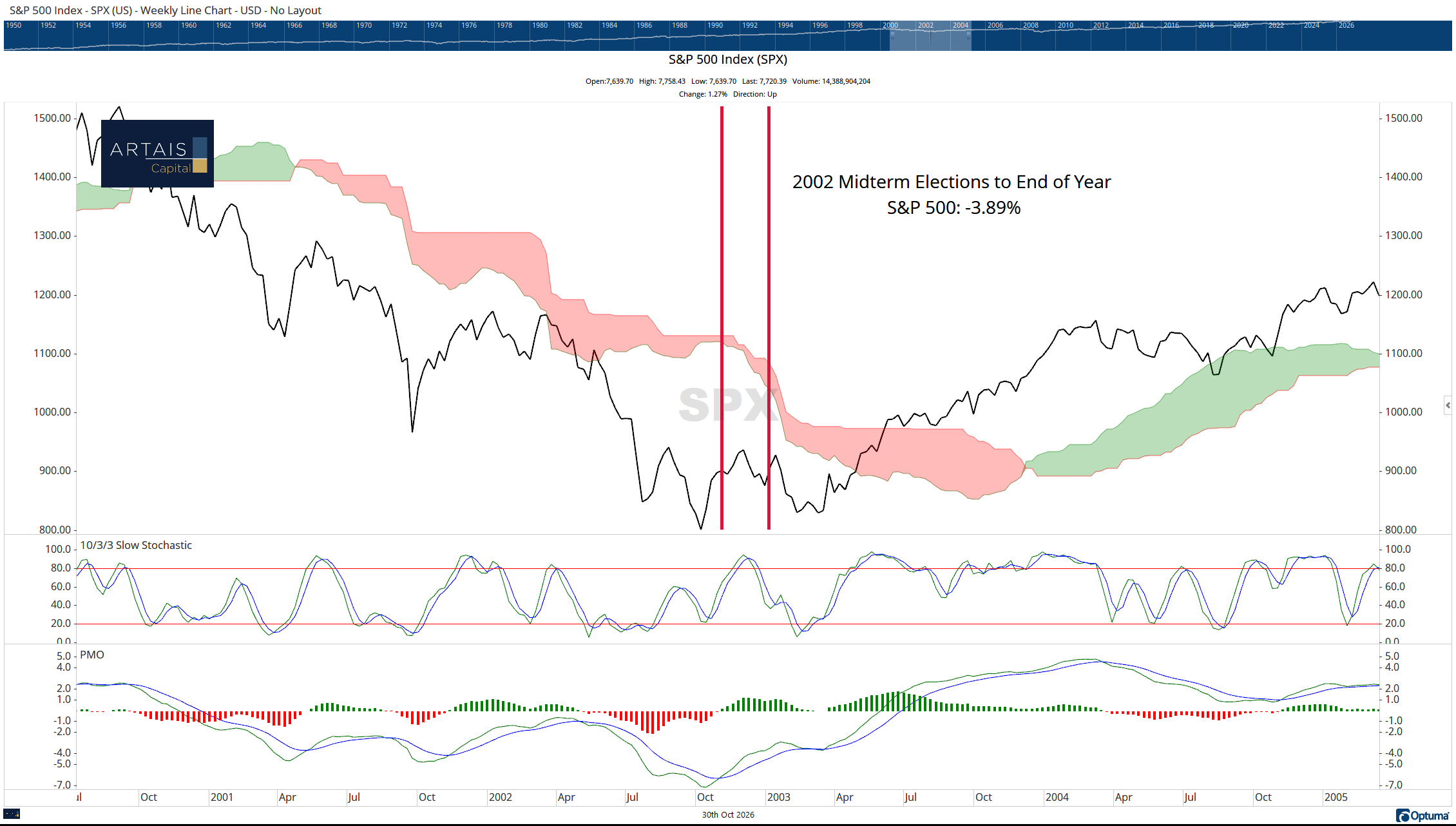
I wanted to see if there were any similar patterns present during the “bad” years, so I zoomed in on 1974, 2002, and 2018.
1974:
2002:
2018:
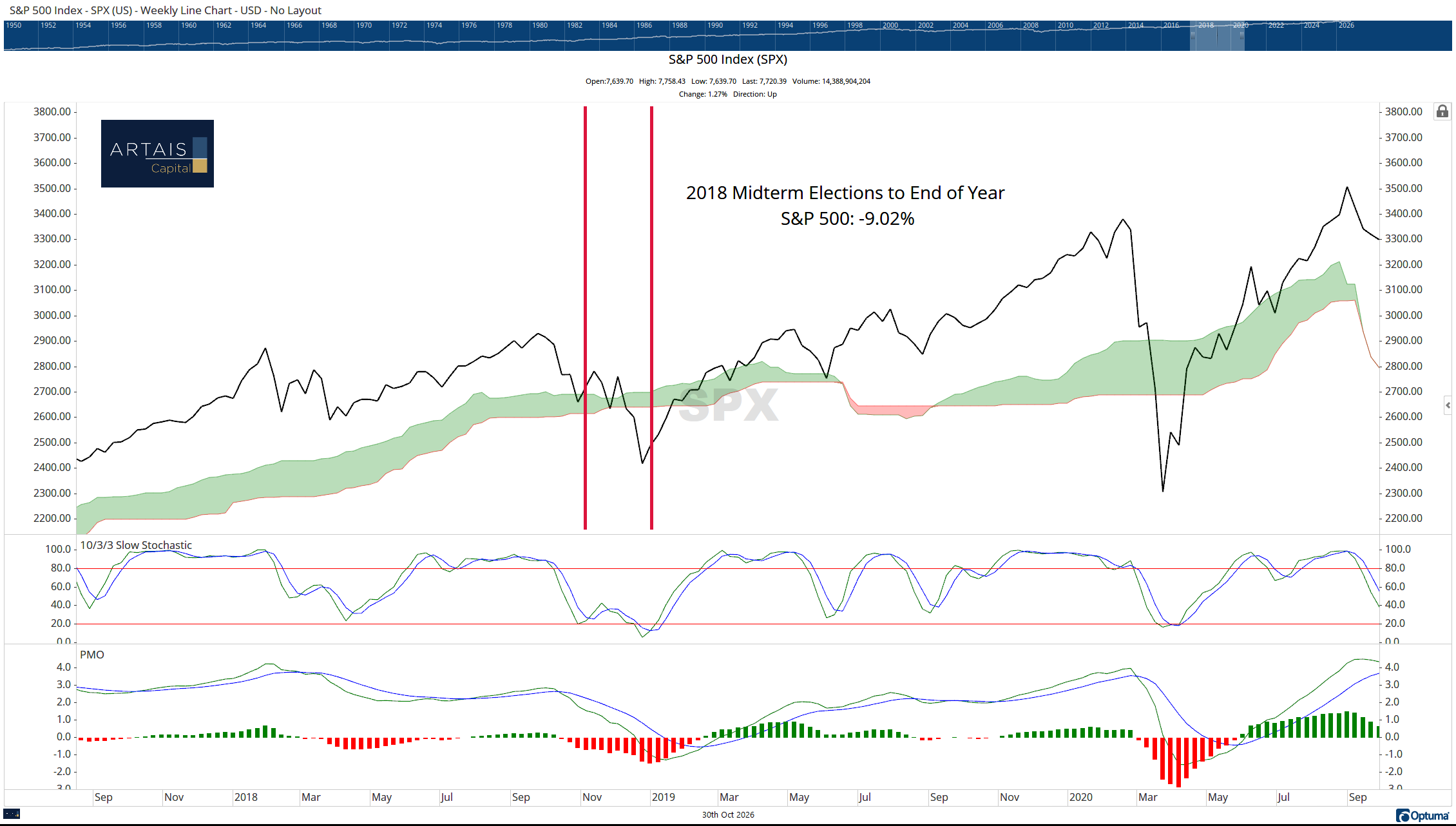
These are only three data points, but they are the worst going back to 1950. Notice in the weekly charts above that the S&P 500 broke below the Ichimoku cloud during each decline.
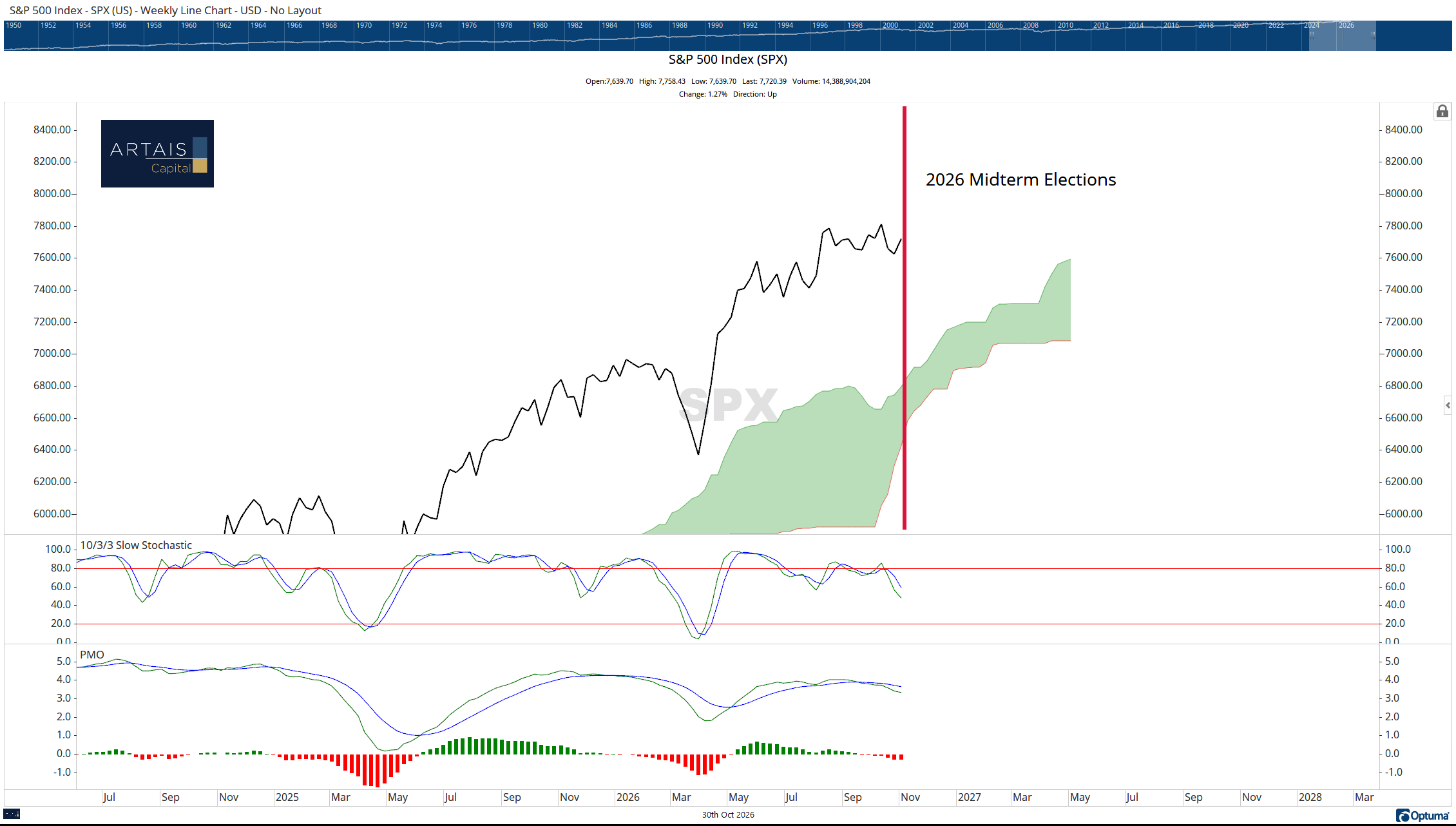
Currently, the S&P 500 is trading well above its weekly cloud, and it would take something catastrophic to change that quickly:
One last thing: I am not naive enough to believe that we are not in a charged political environment. I think many investors feel the same, and they may be trading with higher-than-average risk aversion as we approach the midterm elections.
Because of this, I would expect some volatility. However, unless the weekly charts begin to collapse, there may be some opportunities for longer-term investors to take advantage of.
(Not Investment Advice)
In Summary
Earnings from tech companies involved in the AI buildout have given us a better understanding of some of the bottlenecks that may slow AI growth, but the backlog is suggesting demand is still there - just at a higher cost.
Tech names are repricing this, and now that the bad news is on the table, we may see high-beta investors start to move back into this sector, especially if they believe we will have a post-midterm election rally.
Regarding the Fed and inflation, the bond market seems to be ok with the current policy, as yields have been slowly falling and didn’t spike after the FOMC released its statement.
In addition, spreads in the high-yield market are falling, indicating that bond investors are becoming less risk-averse.
Lastly, the election. I expect some volatility around it, but as I said above, opportunities may begin to present themselves as we approach year-end.
New here?
The Rotation Report is a daily look at where money is moving in the market. Friday’s full report is always free.
Subscribe for free to get it, plus the first half of every daily note.