


If you have been following my daily research notes, one theme I have been discussing is how the US stock market has historically posted strong returns in the period after a midterm election.
Yesterday, the day after the election, we saw the possible start of that trend:
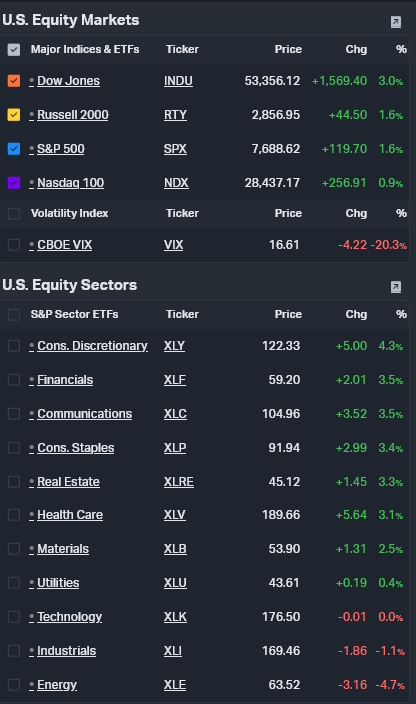
However, not everyone was excited about the results.
Before election night, AI stocks were already under pressure due to worries about rising costs tied to data center buildout. This is in addition to the fact that data centers have been facing delays connecting to the electrical grid:
Utilities are planning generation and transmission around enormous projections for data center demand, but announced megawatts don’t necessarily become load on schedule.
Nearly 40% of U.S. data center projects scheduled for completion this year could miss their targets by more than three months, according to geospatial analytics company SynMax.
Labor shortages, equipment constraints, permitting and — increasingly — access to electricity are slowing the buildout.-Power Engineering
Post-election, a new worry focuses on the future growth of data centers.
Data Center Pushback x2
The pushback towards data centers won big on election night.
Democrats had a huge night as they basically won Texas. Over a fourth of the industry has been planning to build data centers in the state.
One of the priorities that newly elected Governor Gina Hinojosa campaigned on was placing a moratorium on data centers:
We need an immediate moratorium on data centers to last until the legislature can meet to put in place real protections so Texans can have a seat at the table to decide if and how data centers come into their communities
In Ohio, newly elected Governor Amy Acton has also been calling for an immediate moratorium on data centers:
I support a conditional moratorium on data centers to ensure they cover one hundred percent of their utility costs, exclusively build with union labor, operate with full transparency, support the needs of local communities, live by Ohio’s environmental standards, and bring jobs to former industrial areas that have been left behind.
Ohio is open for business, but we are not up for sale. My message as governor will be if you do not meet these conditions, we do not want you in Ohio.
Meta and Amazon (Amazon Web Services) have plans to spend a combined $3 billion on data centers in Ohio.
A similar story has played out in Georgia, Pennsylvania, and numerous other states.
If we just factor in Texas, Georgia, and Ohio, approximately 30% of data center projects may be paused (or need to relocate to an entirely new state).
Good for the Long Term?
I still believe we are in the early part of the AI cycle, similar to what we saw during the 1990s, as most users are still using chatbots and have yet to embrace Agentic AI:
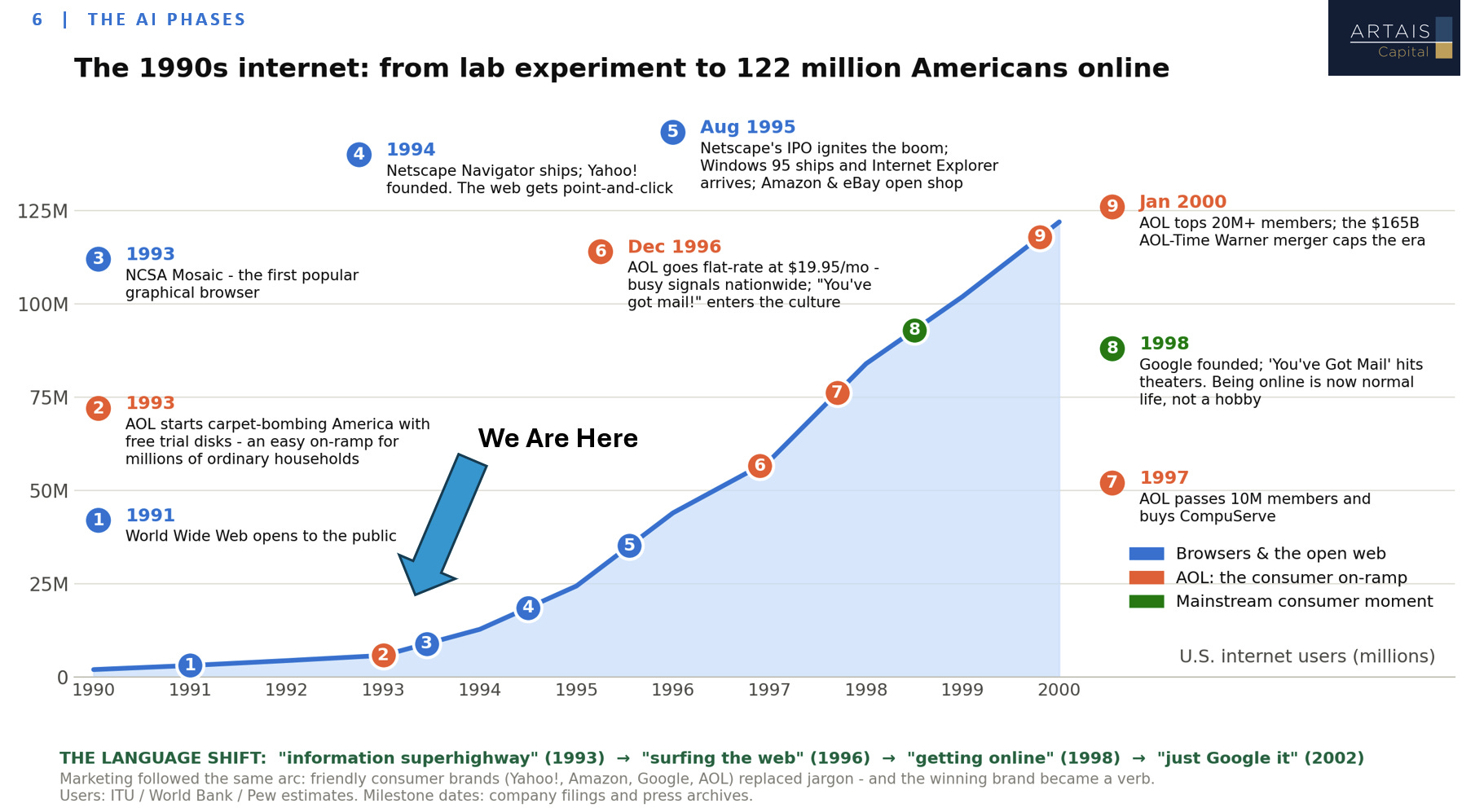
Before the midterm elections, this growth was unchecked and may have been growing too quickly. Faster growth usually means more volatility.
A slowdown in AI growth may allow the cycle to continue at a more reasonable pace, without risking a meltdown in the sector (due to too much credit, lack of guardrails, hacking corporate databases, etc.).
What Happens Next?
We are already seeing weakening momentum in the majority of the AI group:
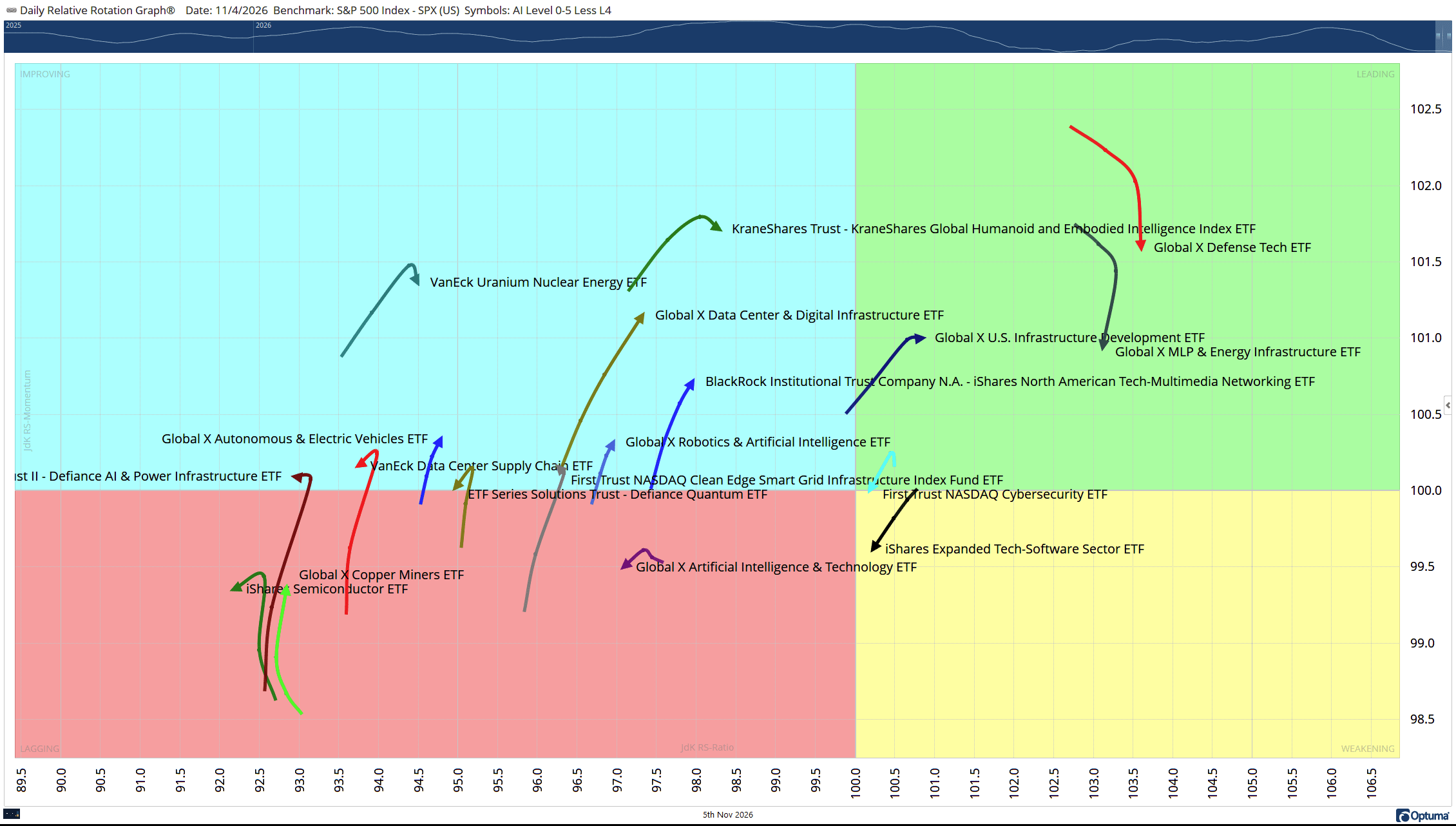
The question for investors is: how much lower can AI stocks fall? And when do investors start looking for bargains in this longer-term cycle?
New here?
The Rotation Report is a daily look at where money is moving in the market. Friday’s full report is always free.
Subscribe for free: