


Yesterday was a tough day in the US stock market as investors repriced risk and rebalanced portfolios to adjust to the larger-than-expected win by Democrats in the midterm races.
But it is a little too early to tell if this is a short-term event, meaning the big players in the market adjusted their portfolios immediately, or if this is part of a longer and deeper readjustment.
The Case for Equities
I spent the last few hours this morning (unfortunately, as I have gotten older, I have become one of those dreaded morning people) combing through charts, and there is a similar pattern emerging in these charts.
Normal Post-Election Volatility
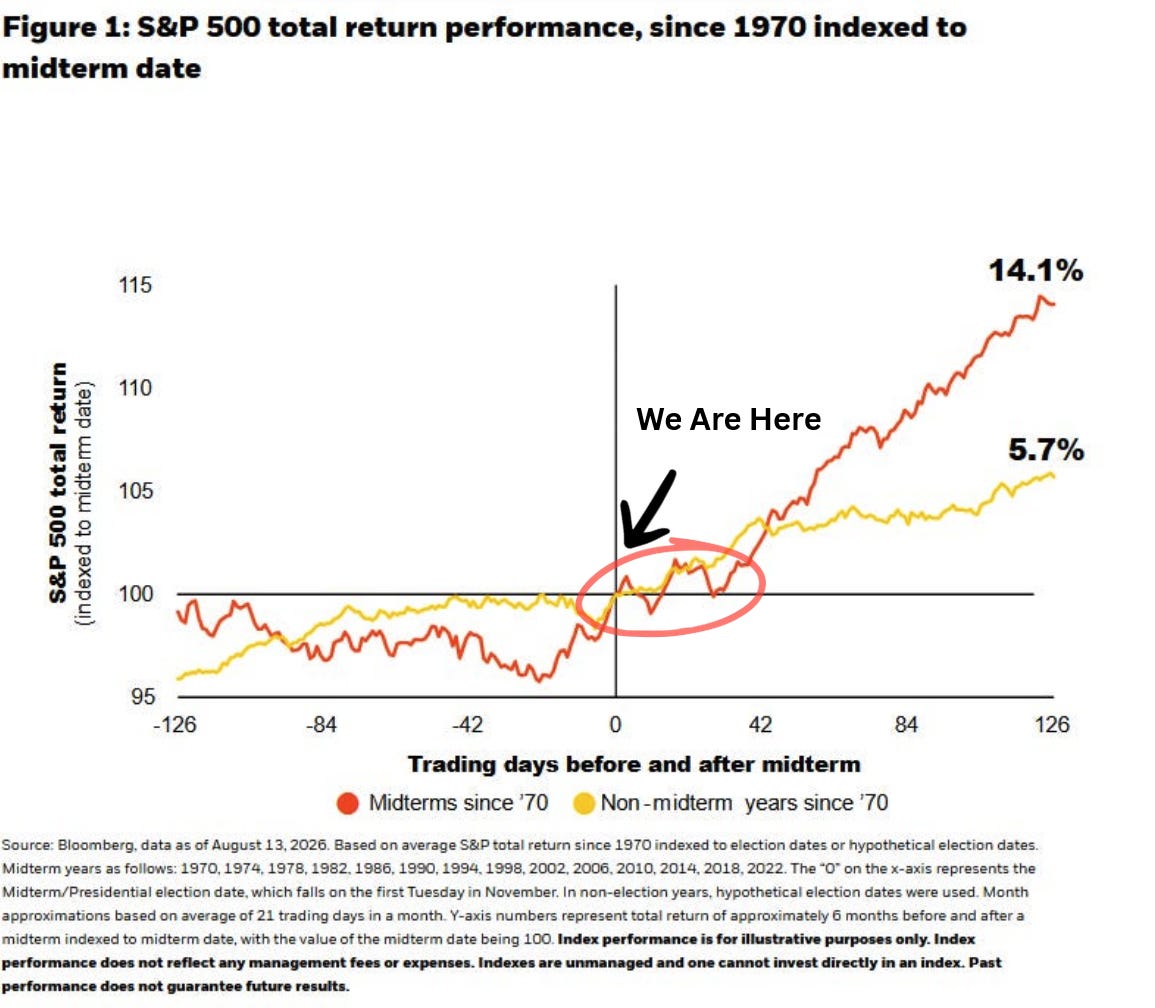
Markets tend to get volatile post-midterm elections as investors re-evaluate their positioning and how new leadership in Congress will impact their investment thesis.
One may expect a greater level of volatility in the current politically charged environment:
Buy Signals Forming in Small Caps
Taking a look at the Russell 2000, the small cap index is trading at a key support level on its daily chart:
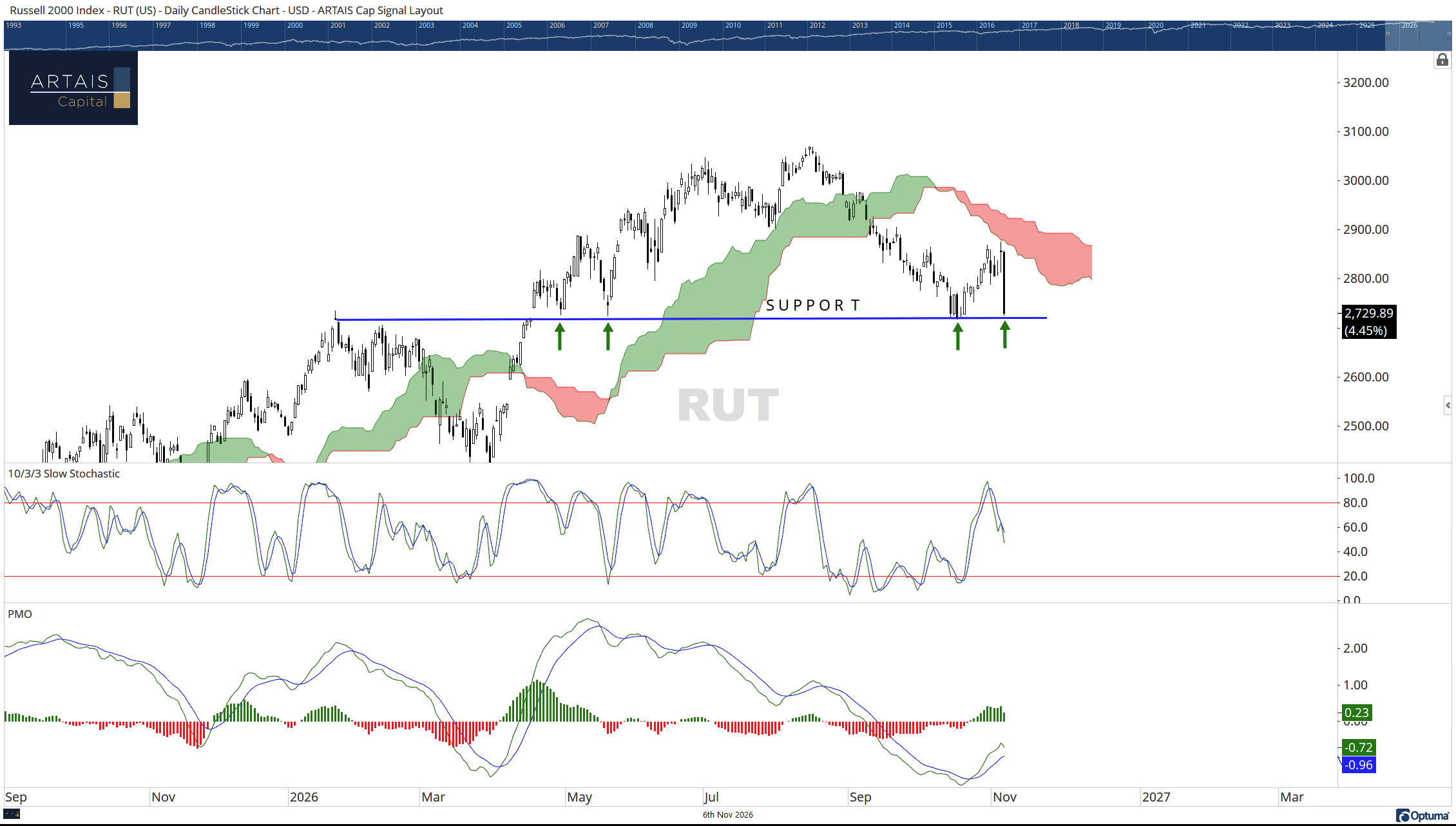
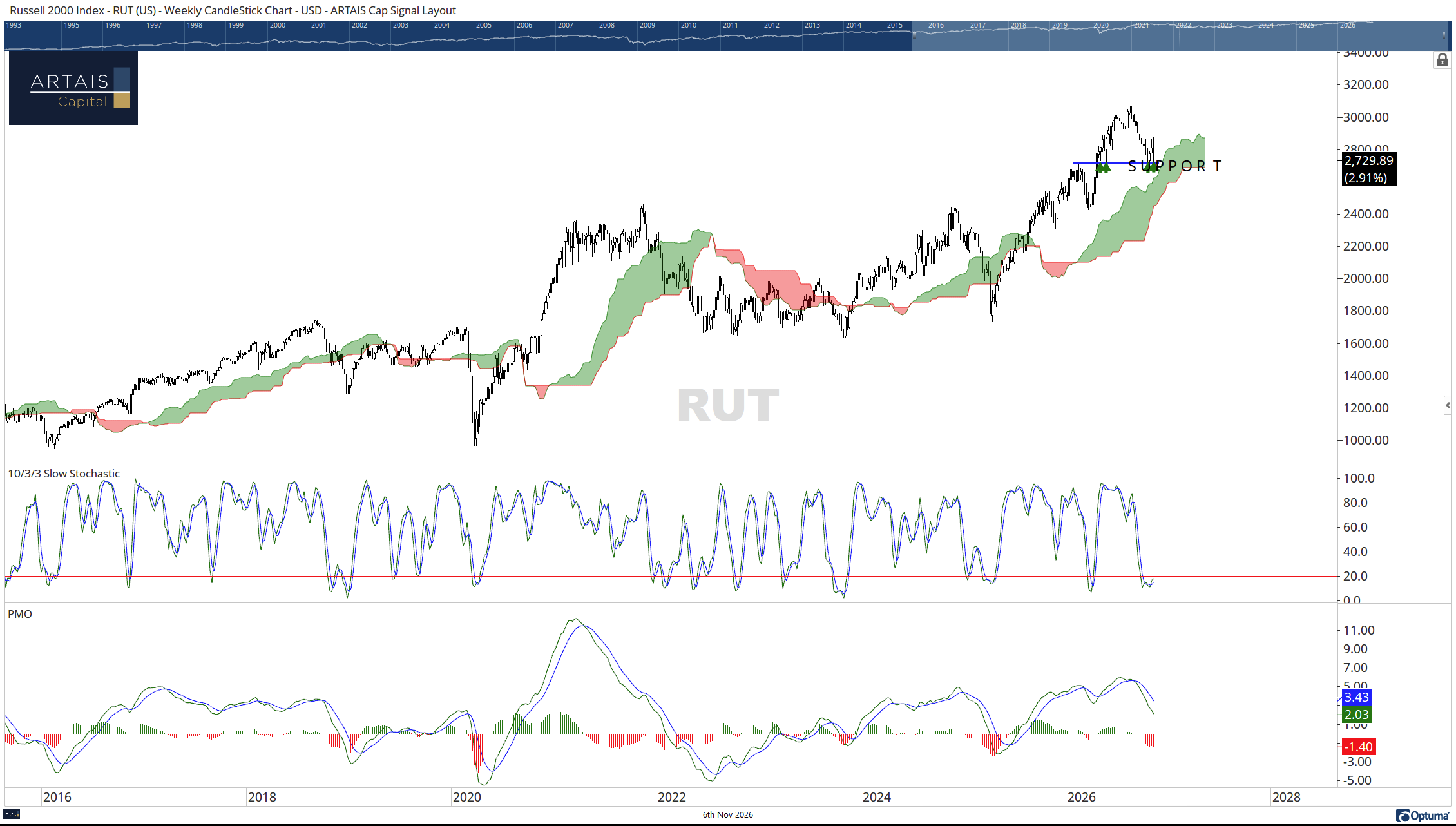
…and is still trading above the cloud on its weekly chart (when indexes start breaking below their weekly cloud support is when things can get really bad):
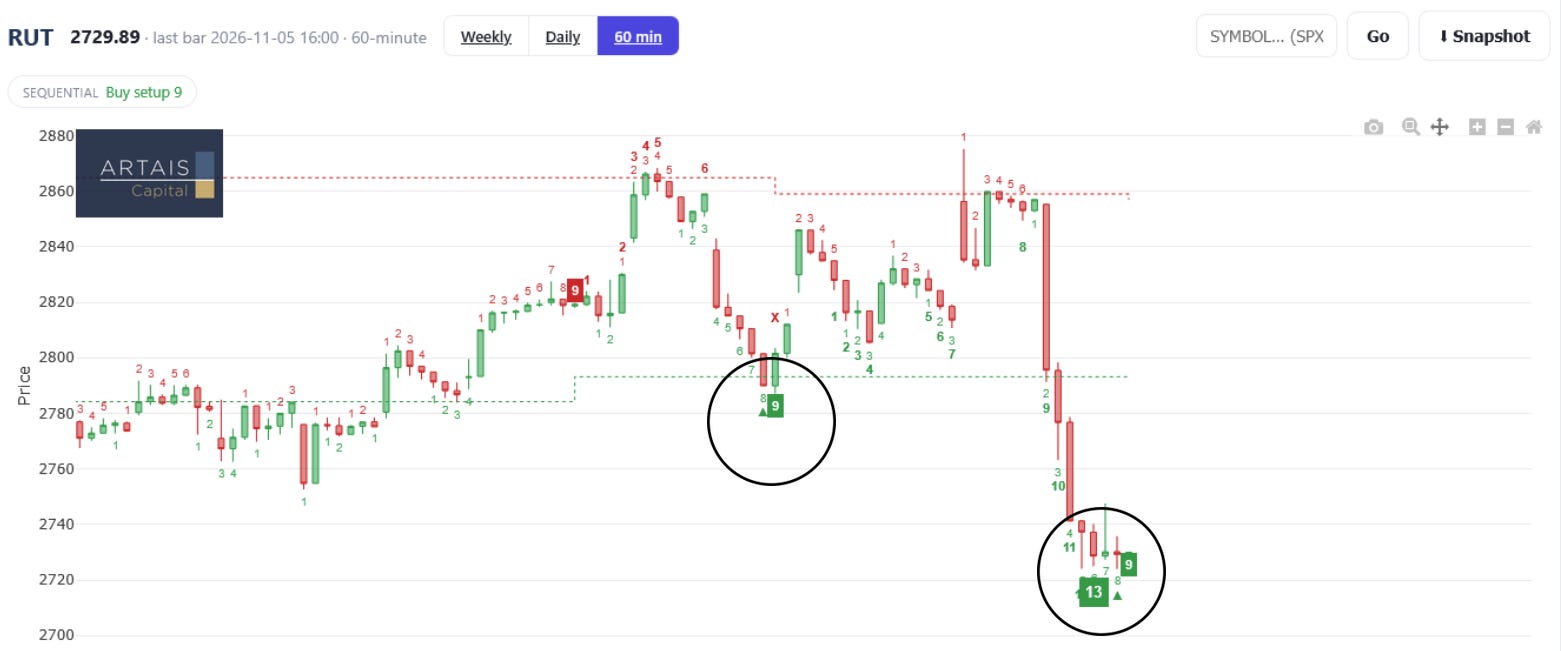
In addition, the DeMark TD Sequential, which measures buying and selling exhaustion, is flashing a buy signal on both the weekly chart:
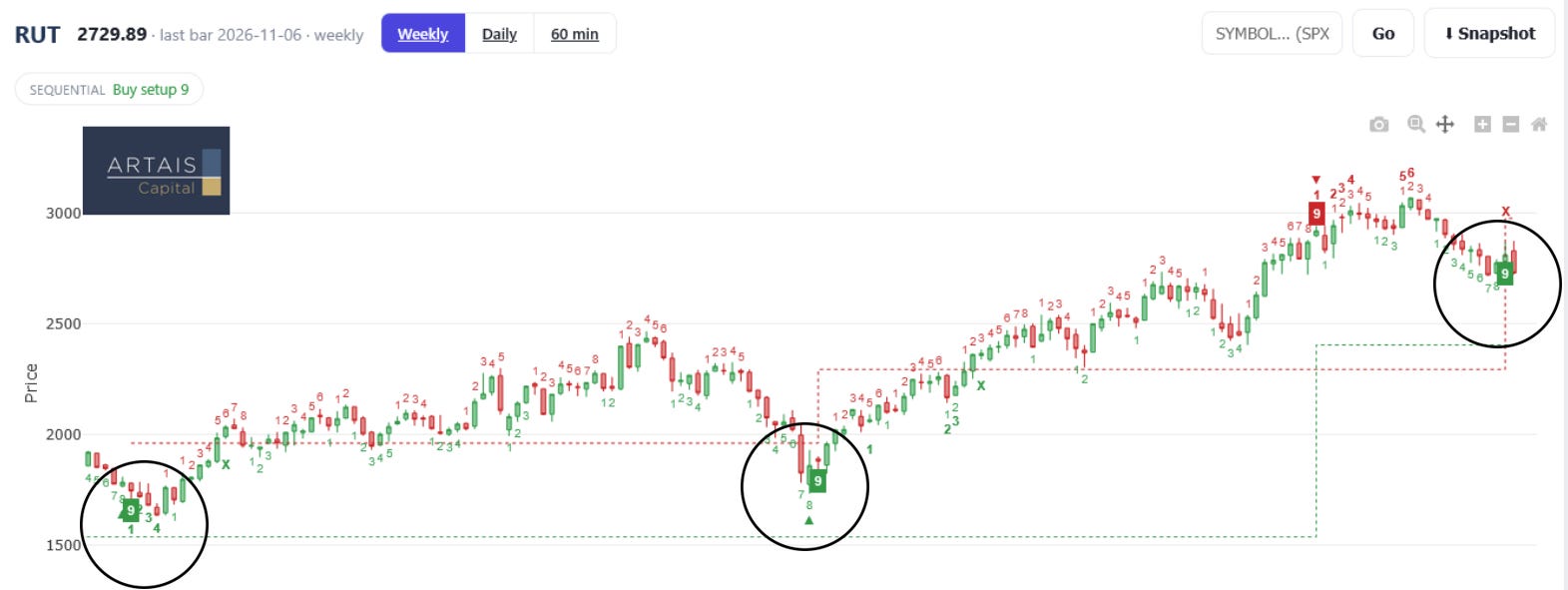
…and on the 60-minute chart, after yesterday’s big sell-off in the market:
Breadth Hasn’t Collapsed
The long-term trend in the S&P 500 index is still intact, and market breadth hasn’t collapsed:
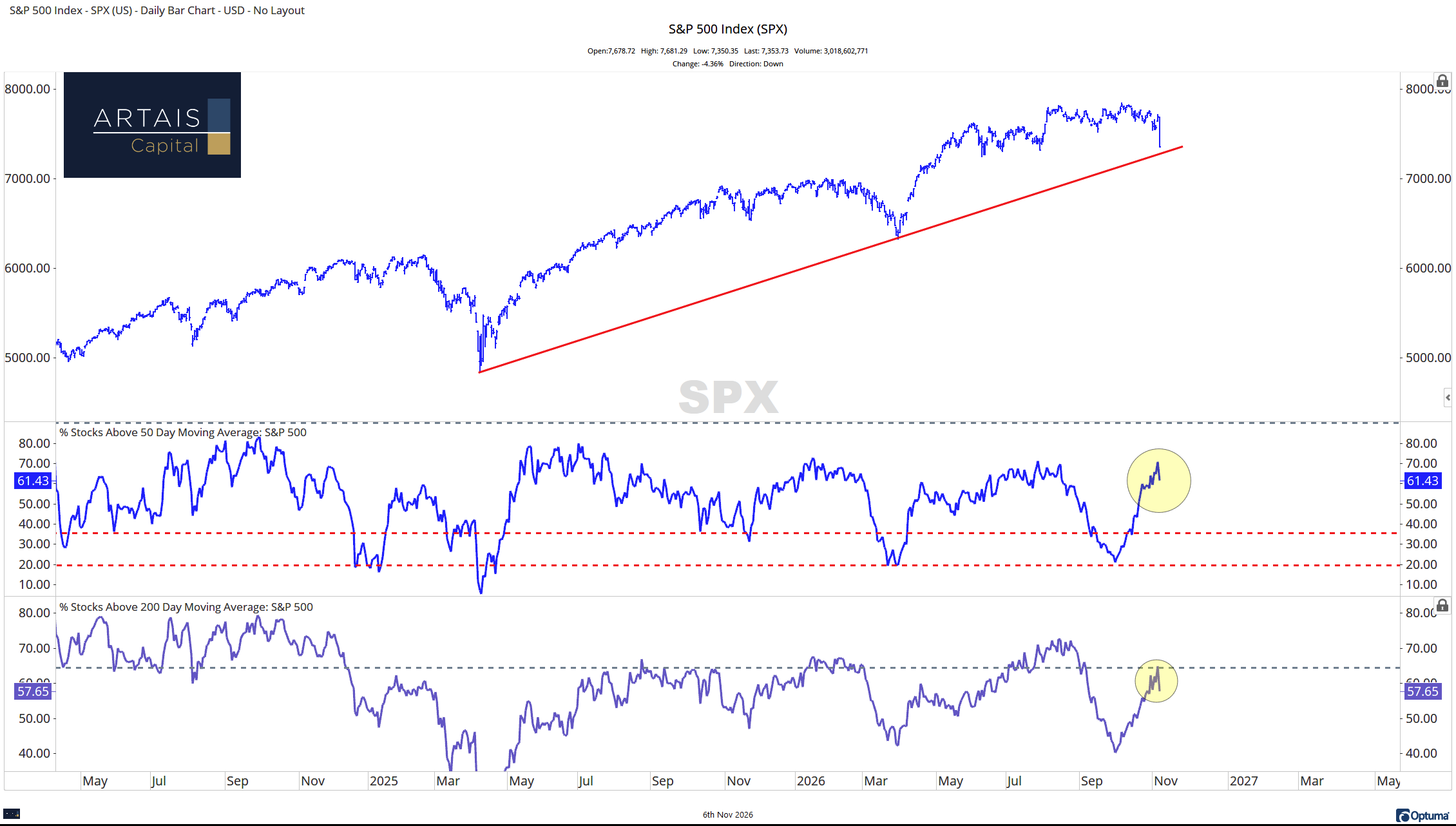
Currently, 61% of stocks within the S&P 500 are still trading above their 50-day moving average, and 57% are still above their 200-day moving average.
Bond Investors Seem Ok With Risk
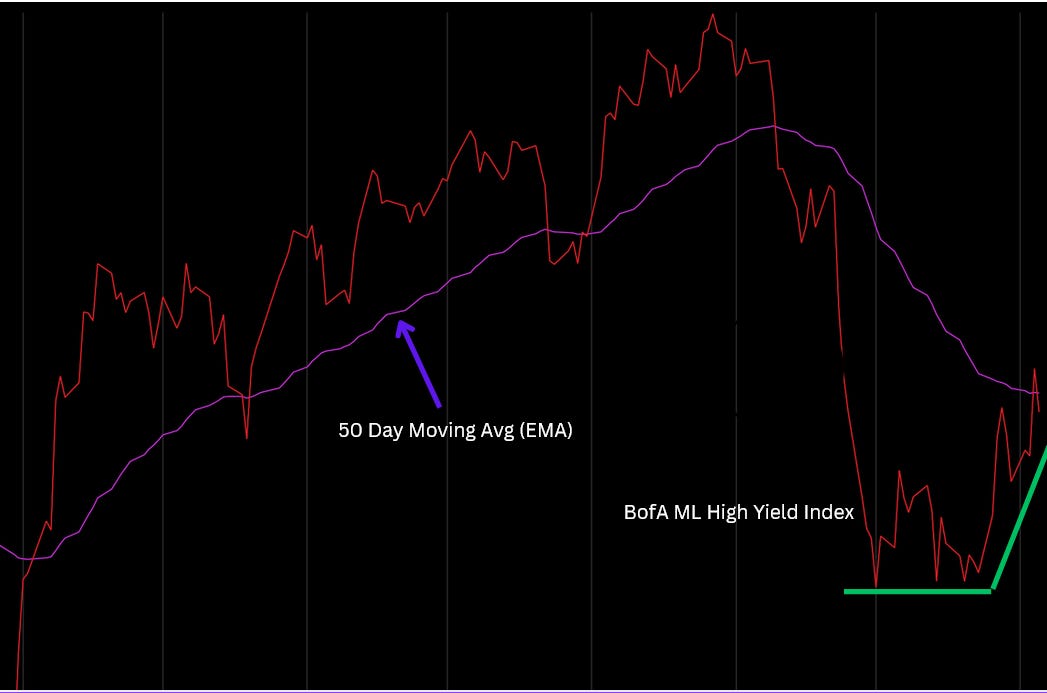
I keep an eye on the high-yield bond market, as it can offer insight into how bond investors feel about risk.
High-yield (aka junk) bonds sit on the riskier end of the curve. As bond investors worry about economic distress, they want a higher yield to compensate for the added risk. This causes bond prices to fall (bond prices and yields have an inverse relationship).
Below is the BofA ML High Yield Total Return Index, and it has been rising, which tells me that bond investors are becoming more comfortable again with the current level of risk in the economic system.
The Economy Is Strong
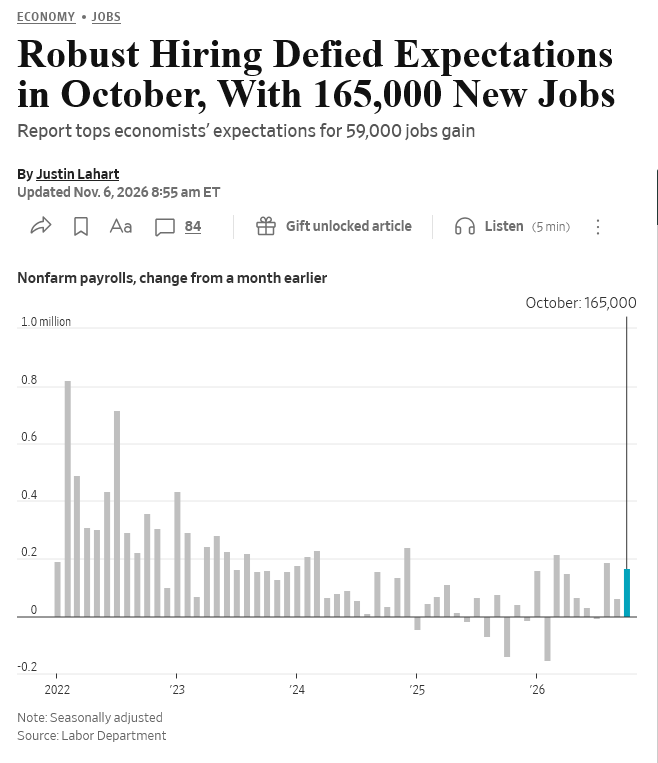
This morning’s jobs report posted stronger-than-expected numbers:
The Case Against Equities
Tech could fall another 6% before testing its longer-term trend:
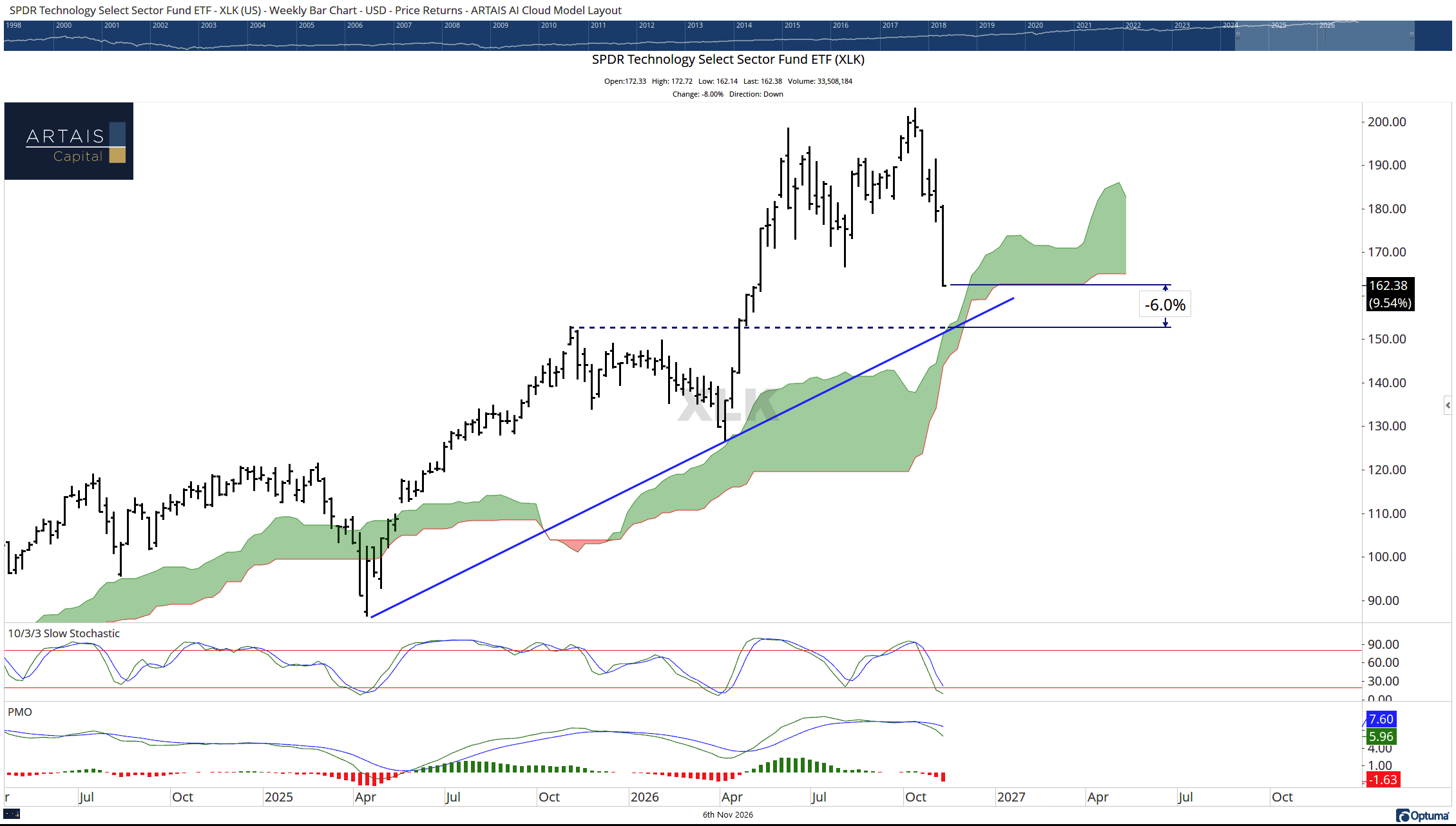
This could potentially spook investors further and mute the typical post-midterm election rally.
Leverage Is Too High
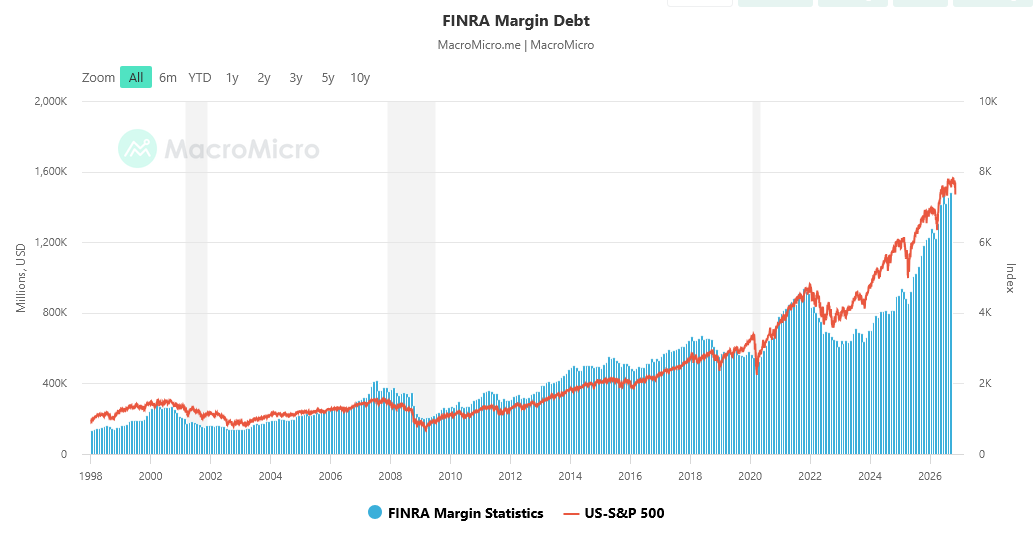
The amount of leverage being used by investors is at extremely high levels. In my opinion, part of yesterday’s sell-off was due to deleveraging, especially in the high-tech space.
As I mentioned in yesterday’s report, data center growth will likely slow.
Democrats won Texas, Georgia, and Ohio governor races, and all have said they will halt or slow down data center construction in their state. This means that approximately 30% of ALL data center projects may be paused (or need to relocate to an entirely new state).
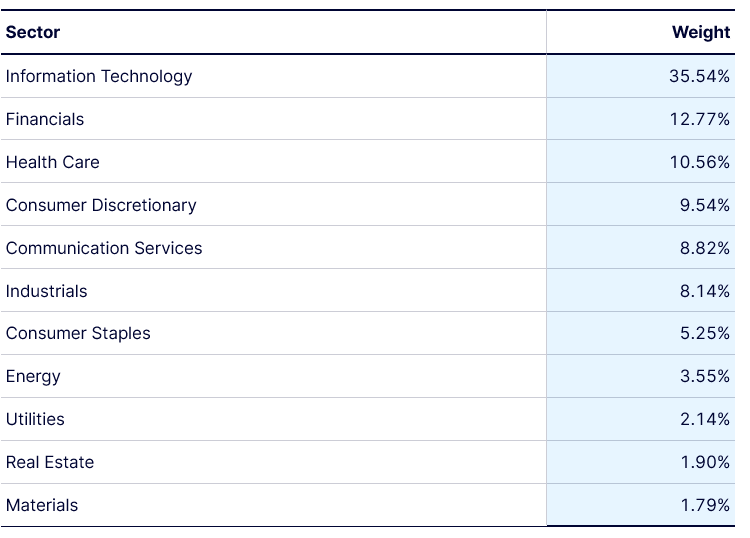
A large deleveraging event in the technology sector will negatively impact the S&P 500, as 35% of the index is comprised of technology stocks:
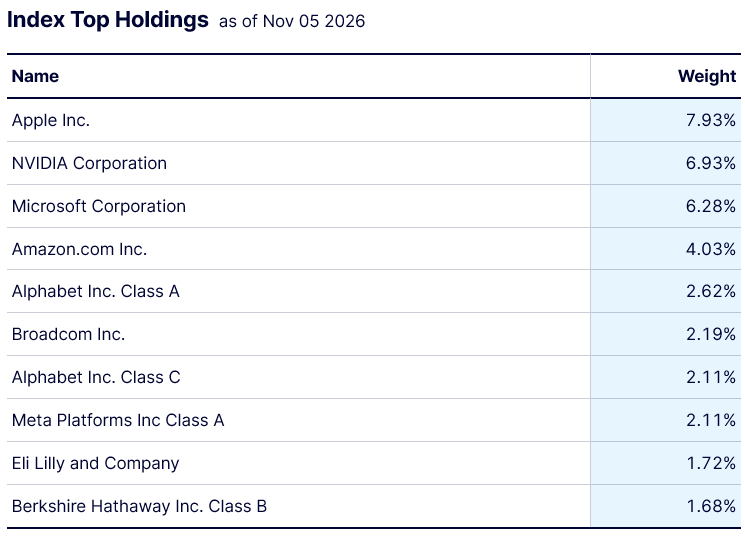
…and the majority of the top ten largest companies in the index will be negatively affected by a slowdown in the AI growth cycle:
Weight Of The Evidence
As of now, I see the weight of the evidence favoring stocks, but with a higher-than-normal level of volatility as investors digest the strong showing by Democrats and await how data center buildout will be impacted.
Will the newly elected governors completely shut down data center buildouts, potentially affecting blue-collar jobs in their state?
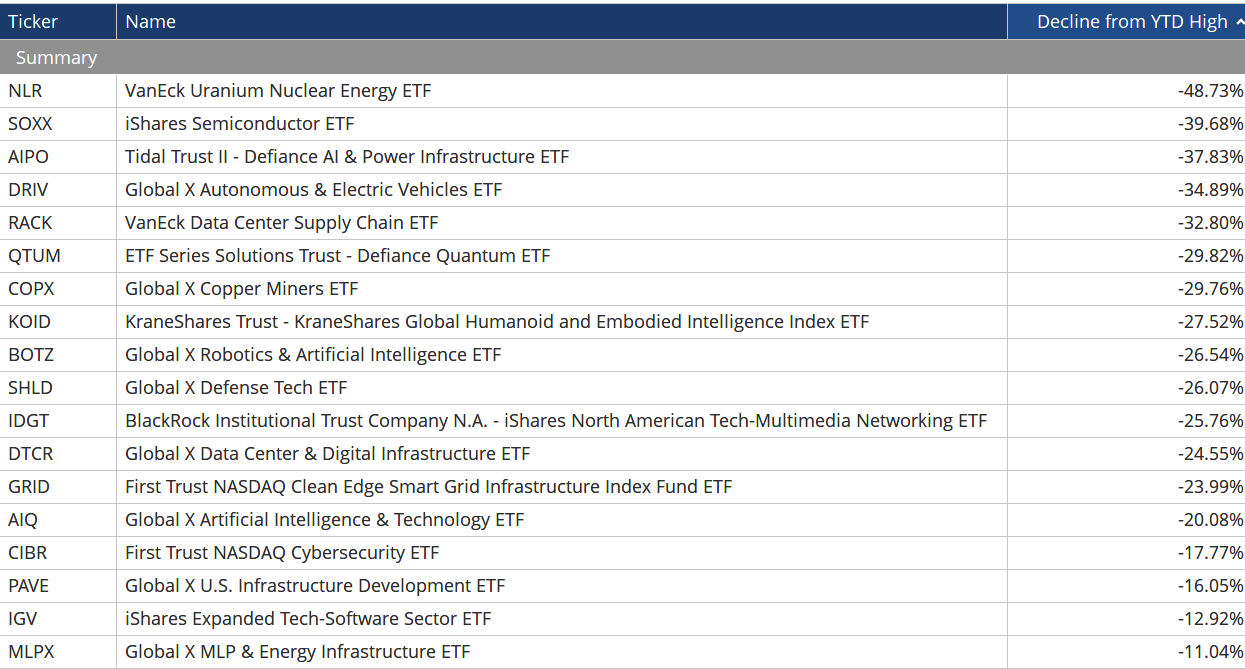
Or will a middle ground be found, where investors may start to look for opportunities in the AI space again? Especially when areas in the AI space (which isn’t going away) have already significantly declined from their highs:
New here?
The Rotation Report is a daily look at where money is moving in the market. Friday’s full report is always free.
Subscribe for free!