


Wow, what a week!
As the market started to exit a period of heightened volatility, which has been a historical norm after midterm elections, Nvidia’s CEO (now former) Jensen Huang said, “Hold my beer.”

The cheating scandal surrounding Jensen (which I believe is up to three women now) is not the big issue, though.
Instead, much more serious accusations have been made, including reckless financing and illegal sales of Nvidia chips to China.
Caught With His Pants Down (In More Than One Way)
If you haven’t been following this story closely, here is a brief summary:
According to The Wall Street Journal, one of the women Jensen Huang was having an affair with was Alice Huang (no relation), an executive at a Singapore-based company called Megaspeed. And “U.S. officials believe that China’s intelligence services recruited Alice Huang as an asset because of her access to the chip-designer chief.”
Because of this, Congress now wants Jensen to testify in a closed-door session to find out what really happened.
Why is Congress interested in an affair?
Well, since 2022, the US has blocked companies like Nvidia from selling their top-of-the-line semiconductor chips to China. The purpose of this was to make sure China didn’t take the lead in the AI race.
BUT, the law blocking sales to China allowed the sales to continue in nearby countries like Singapore and Malaysia.
This is where things get suspicious.
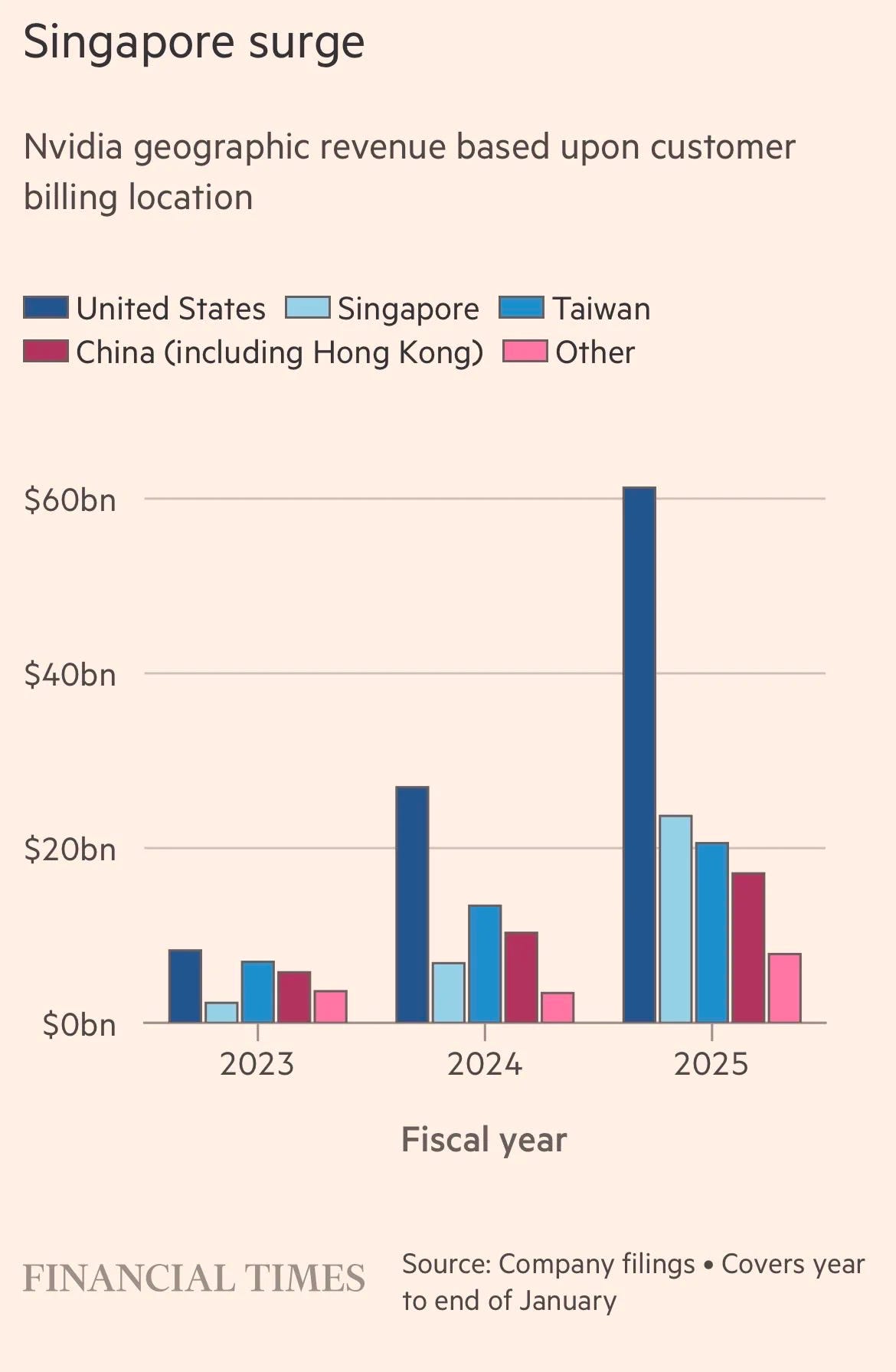
Since 2022, Nvidia’s revenue from Singapore has risen rapidly:
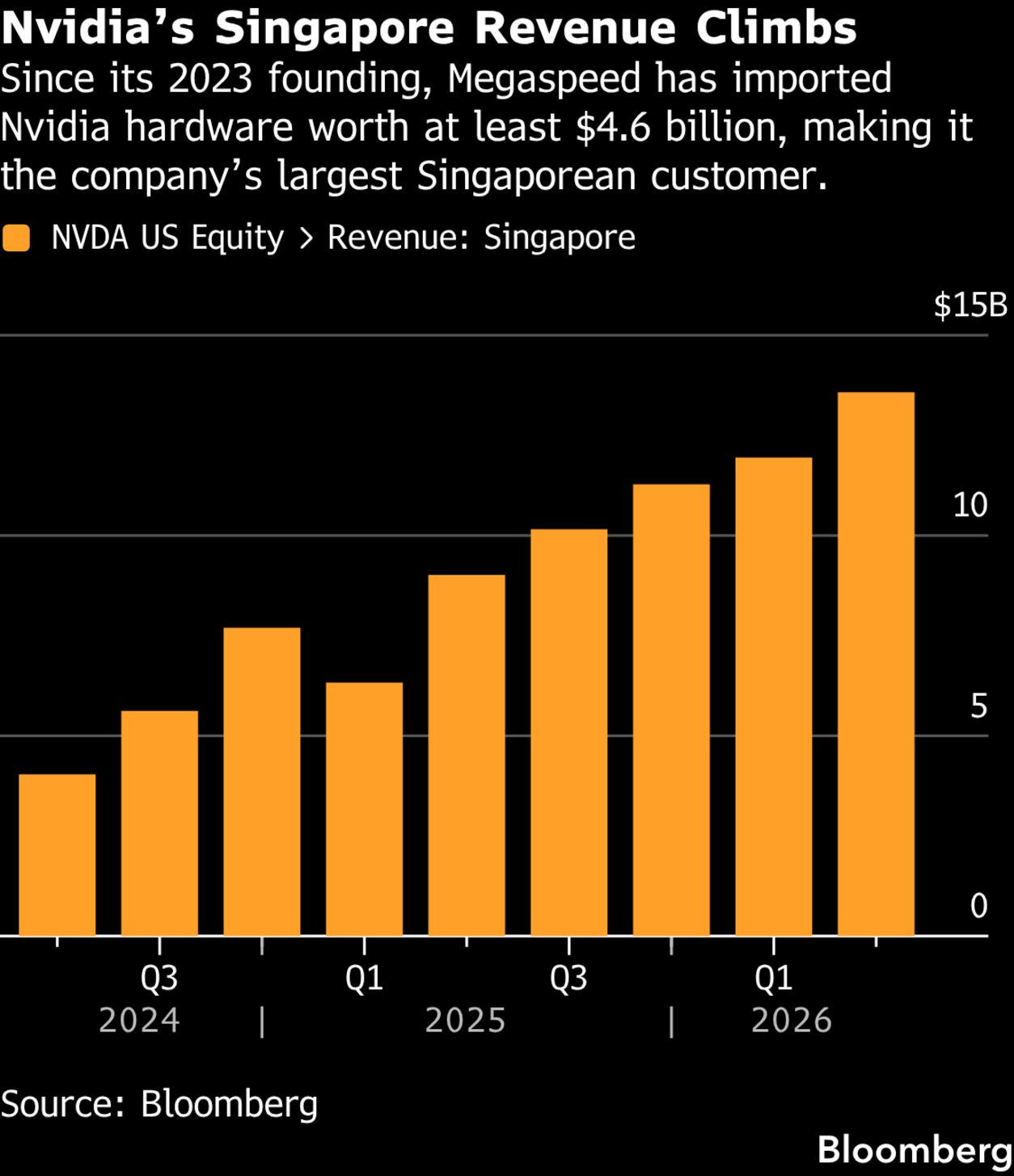
…and the largest customer in Singapore just happened to be the same company that Jensen’s girlfriend worked at:
Oh, and the US government may have known about it and tried to cover it up (allegedly):
The WSJ reported that in the spring of 2026 the US government was aware of the relationship:
“Secretary of State Marco Rubio supervises the drafting of a classified memo warning that Huang had a personal relationship with Alice Huang, according to people familiar with the matter. By this time, the Justice Department has begun leading the investigation into Megaspeed.”
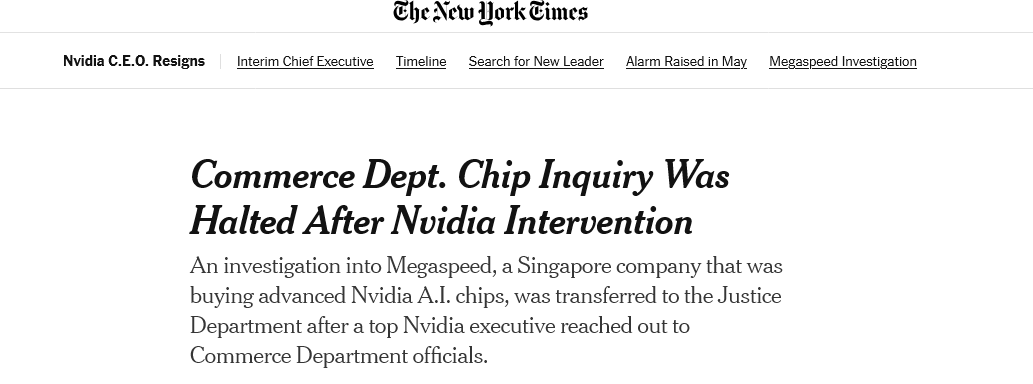
…and then the US government (allegedly) halted the investigation:
But There Is Another Problem…

Yep, there is still more to this story, and it involves how Nvidia is financing AI growth.
The company has been criticized in the past for participating in circular financing.
What is circular financing?
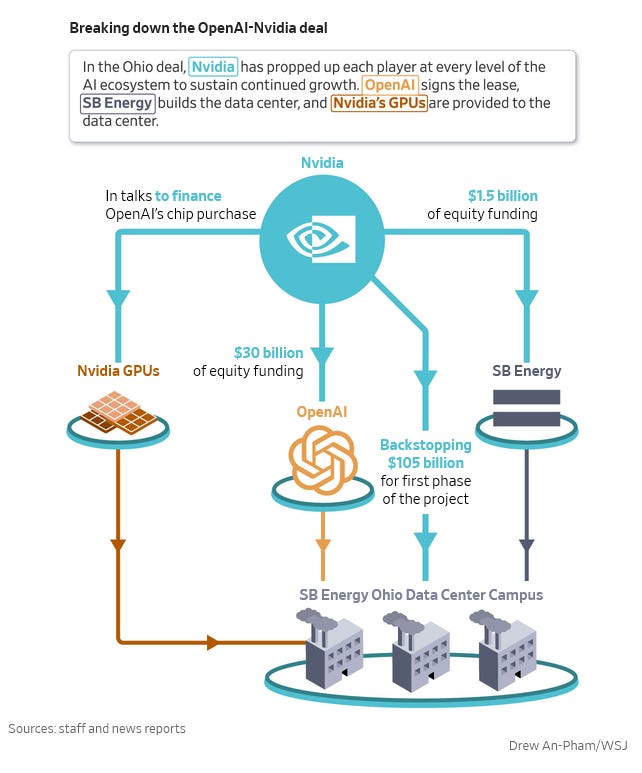
Basically, Nvidia would finance an AI company, like OpenAI, so it could use that money to buy chips from Nvidia. Additionally, Nvidia has been financing the projects where these chips would be used.
The revenue generated from these projects would then be used to pay back Nvidia.
The circular financing model works, as long as the AI projects generate revenue.
In other words, Nvidia became the bank to AI.
Here is a 3-minute video from The Economist that does a better job of explaining it:
As we learn more about Nvidia's inner workings during this time frame, reports suggest that the company’s CFO and now interim CEO, Colette Kress, began to question whether Jensen's lending spree was going too far.
Jensen reportedly brushed off her concerns, calling her “a deer in headlights.”
Some of Kress’s concerns may be valid, as Jensen worried that the major cloud companies were starting to manufacture their own chips.

The concern here is that since Nvidia’s chips are in high demand, prices have remained elevated, not only for the chips themselves but also for the memory and wafers needed to manufacture them.
One of Jensen’s worries was that the enormous amount of memory and chip wafers ordered (and committed to) at these higher prices could reduce Nvidia’s product profits if chips from companies like Google flood the market and lower the prices AI companies are willing to pay.
It All Comes Back to the Bond Market
Paid subscribers know that the AI-themed model I manage (and share via this publication) relies on data from the high-yield bond market to help determine how much to allocate to equities.
Since early October, elevated high-yield bond spreads have kept the model out of equities.
Continued worries about inflation and a lack of action from the Fed have caused high-yield spreads to widen:
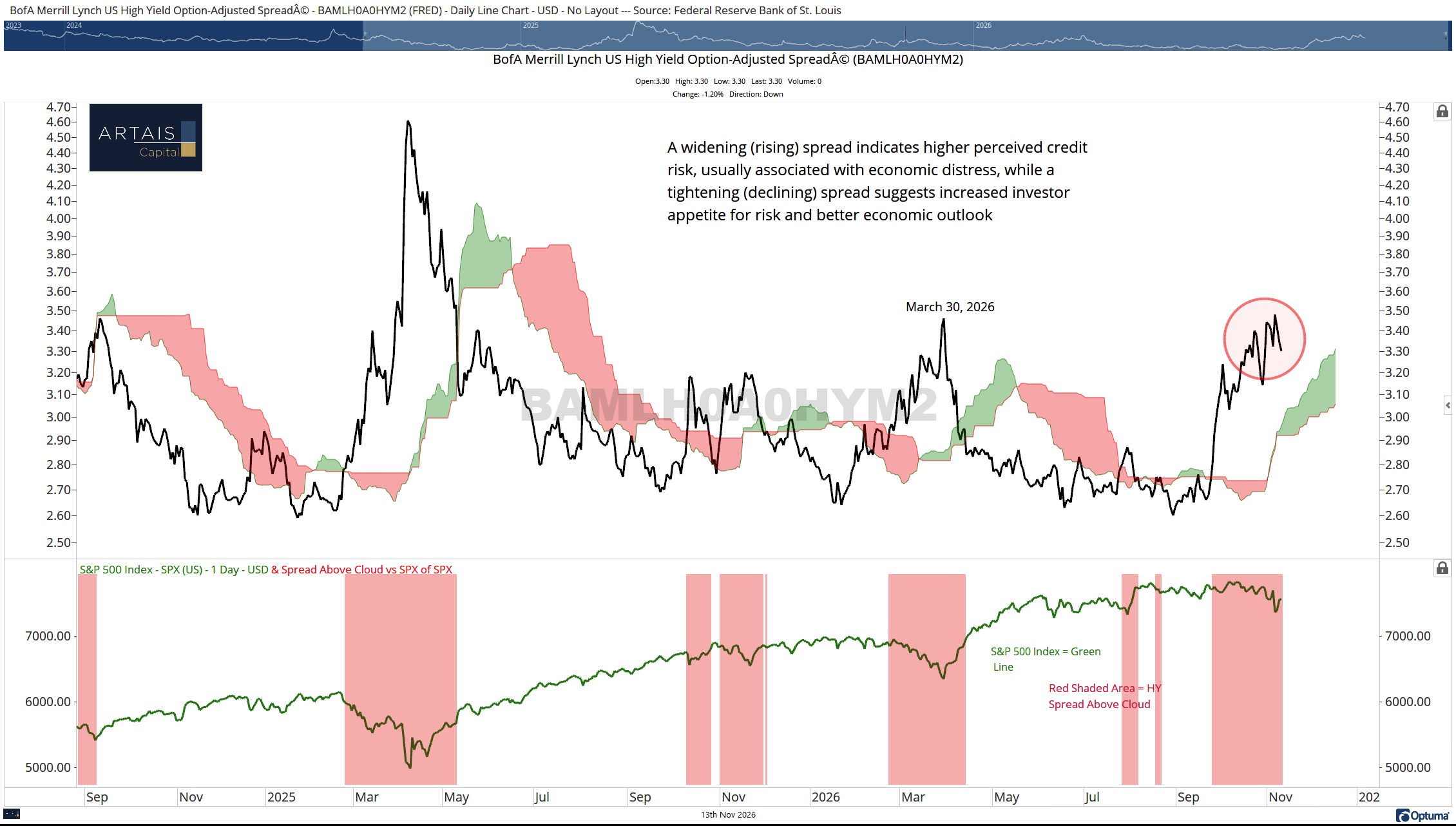
These spreads could widen further if concerns grow that circular financing may slow, leading AI companies to try to access the bond market for additional funding.
Stricter requirements and higher borrowing costs could slow the AI growth cycle (which I have argued in the past may be good for the health of the longer-term cycle).
Summary
So now, investors have a couple of things to digest.
First, is all the bad news in?
Magazine covers, like this week’s cover from The Economist, tend to mark the turning point in a theme. I discussed the Magazine Cover Indicator in yesterday’s report.
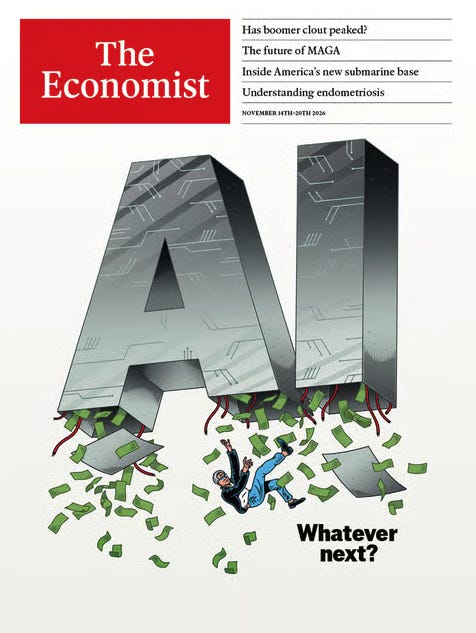
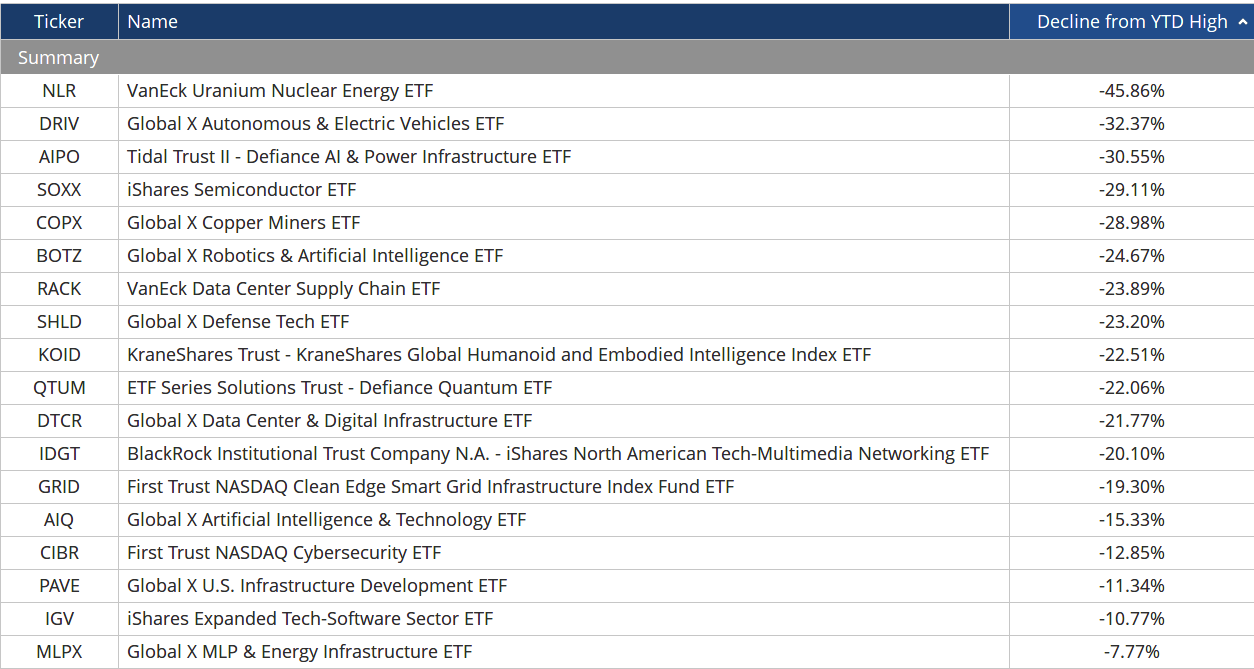
AI-themed stocks have been heavily sold off since their peak earlier this year:
As has Nvidia’s stock price, which was down over 38% from its high, before rebounding at a key support level:
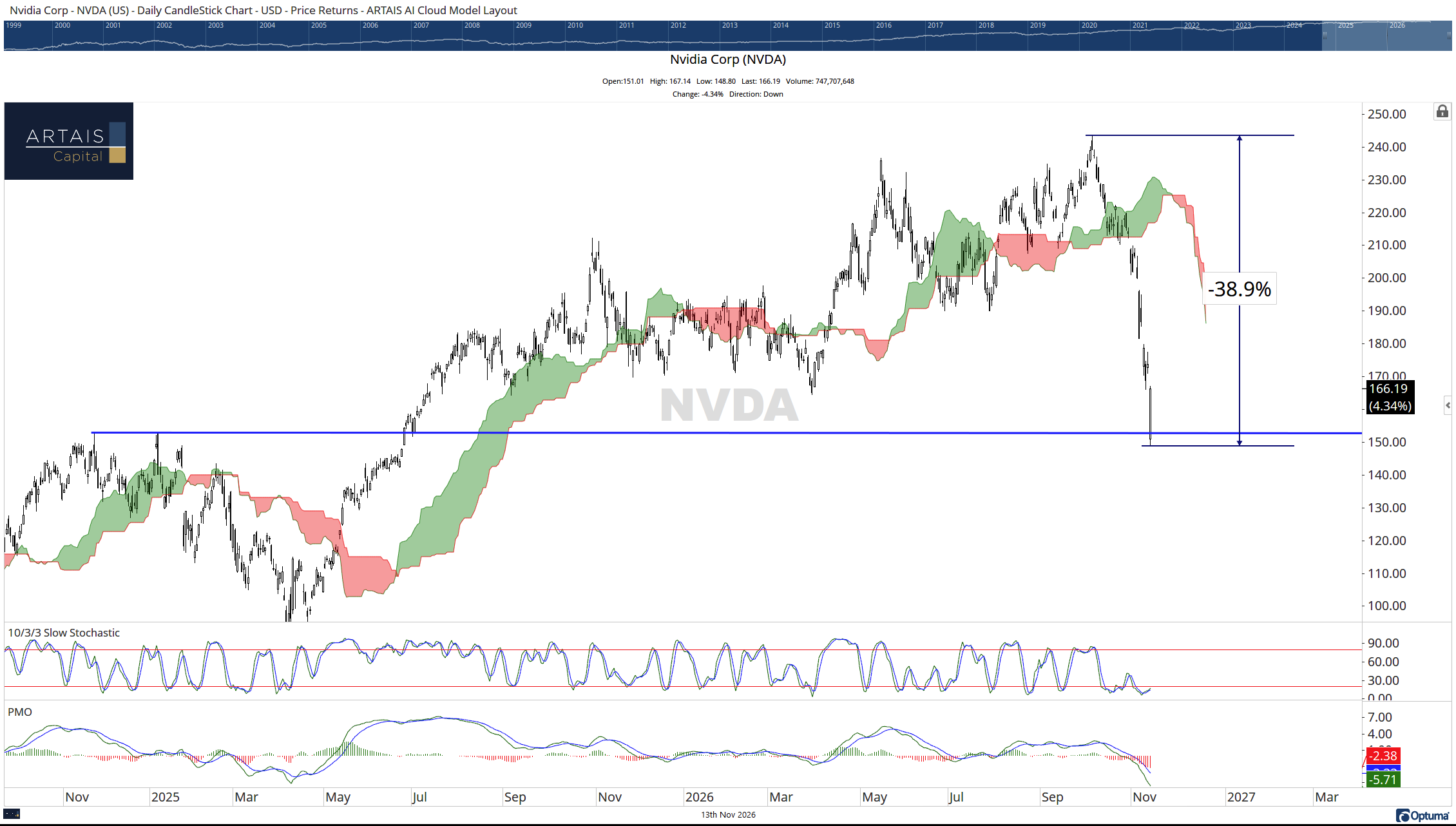
The question facing investors is whether Nvidia is worth 38% less without Jensen at the helm and whether this is a buying opportunity. Or if Nvidia becomes the Enron of the AI cycle.
Second, who takes the helm will send a signal.
Nvidia releases earnings this coming Tuesday (Nov 17th). I think the company is scrambling to find a replacement, as interim CEO Colette Kress doesn’t seem like the type of person (based on watching her interviews) who can go on stage and excite the industry.
If the company can bring in a tech rockstar (Tim Cook, anyone?), it will send two important messages to Wall Street:
Lending is not an issue. Why would a tech rockstar/legend risk their reputation by taking the helm of a company about to face major financing issues?
(If lending is truly a problem, the board may decide to keep CFO Kress around as CEO to see if she can fix the mess)
China is not an issue. Perhaps Jensen takes the fall, or Nvidia’s part in illegal chip sales to China is overblown.
Again, why would a tech rockstar/legend ruin their reputation by taking the helm of a company that is about to face a national security investigation?
Whether we hear that interim CEO Kress stays put for now or a tech superstar comes in by Tuesday will tell us a lot about Nvidia's future.
If we see someone with the star power of Tim Cook, then I think we will start to see the high-yield market calm down as lending worries dissipate.
BUT… if we get Tim Cook and the bond market remains nervous, it is a sign that an even bigger story is emerging: inflation/stagflation and the belief that the Fed is making a major policy mistake that is about to cause a contraction in the US economy.
So, as always, watch the bond market for clues as to what is next for stocks.
Thanks for reading, and have a great weekend!
John Rothe, CMT
New here?
The Rotation Report is a daily look at where money is moving in the market. Friday’s full report is always free.
Subscribe for free!